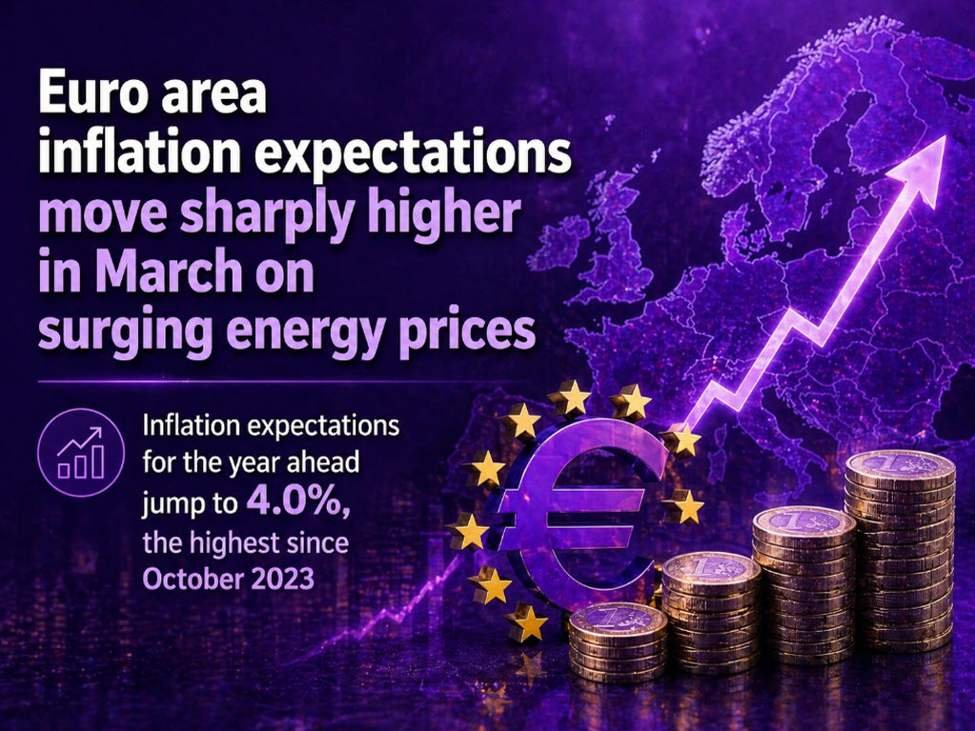
ECB holds rates as expected; June hike fully priced by markets. Deutsche Bank flags upside inflation risk and downside growth risk. Eurozone 1yr inflation expectations jump to 4.0%, highest since 2023. Credit conditions tightest since early 2024.
Summary:
- The ECB kept policy rates unchanged at its latest meeting, a decision in line with market expectations, but the accompanying statement flagged an intensification of risks on both sides of its mandate
- Deutsche Bank characterised the risks as symmetric: upside risks to inflation and downside risks to growth, reflecting the stagflationary pressures building across the eurozone
- The statement conveyed a sense of calm confidence, referencing the resilience of the economy in recent quarters and well-anchored longer-term inflation expectations, but also signalled rising concern over the prolonged Middle East conflict
- Deutsche Bank noted the statement does not pre-commit the ECB to hiking in June, but equally does not prevent a hike at that meeting
- The ECB’s consumer inflation expectations survey for March showed one-year expectations jumping from 2.5% to 4.0%, their highest level since 2023, pointing to a meaningful deterioration in the inflation outlook at the household level
- The ECB’s Bank Lending Survey showed a clear deterioration in credit conditions, which are now at their tightest since early 2024, signalling that the existing rate environment is already weighing on lending activity and growth
- Markets have moved to fully price in an ECB rate hike by the June meeting, with bond yields rising and eurozone equity markets weakening in response
- Deutsche Bank Research described the backdrop as difficult, with inflation fears driving the repricing across asset classes
The European Central Bank held its policy rates unchanged at its latest meeting, but the decision masked a more uncomfortable picture beneath the surface. According to Deutsche Bank Research, the ECB’s own surveys are now flashing warning signs on both sides of its mandate simultaneously, leaving policymakers navigating one of the more difficult backdrops since the post-pandemic inflation surge.
The most striking data point comes from the ECB’s monthly consumer survey for March, which showed one-year inflation expectations jumping from 2.5% to 4.0% across the eurozone, the highest reading since 2023. That kind of move in household expectations is not something central banks can afford to dismiss. If consumers begin pricing higher inflation into wage demands and spending behaviour, the risk of expectations becoming self-fulfilling rises sharply, and the cost of correcting course later becomes considerably higher.
At the same time, the ECB’s Bank Lending Survey painted a deteriorating picture for growth. Credit conditions tightened to their most restrictive since early 2024, suggesting the existing rate environment is already biting into lending activity and, by extension, the real economy. Deutsche Bank described the combination as a difficult backdrop, one in which the central bank must weigh the risk of doing too little on inflation against the risk of tipping a slowing economy into sharper contraction.
The ECB’s statement attempted to hold both concerns in balance. Deutsche Bank noted a sense of calm confidence in the language, with references to recent economic resilience and well-anchored longer-term inflation expectations. But there was also a discernible shift in tone around the Middle East, with concern growing the longer the conflict continues to keep energy prices elevated and sentiment fragile.
Crucially, Deutsche Bank’s reading of the statement is that it neither commits the ECB to hiking in June nor rules it out. Markets have already drawn their own conclusion: a rate increase at the June meeting is now fully priced. Bond yields have risen and eurozone equities have weakened as investors reprice the policy path.
—
The ECB’s hold was fully expected, but the statement’s tone and accompanying data surveys are pushing the market conversation in a hawkish direction. Futures have fully priced a June hike, bond yields are moving higher and eurozone equities are weakening.
The consumer inflation expectations jump from 2.5% to 4.0% is the standout data point. If sustained, it risks becoming self-fulfilling through wage negotiations and pricing behaviour, which would ultimately force the ECB’s hand regardless of the growth picture. The Bank Lending Survey deterioration is the complicating factor, with credit conditions at their tightest since early 2024 meaning any further hike carries genuine downside growth risk. The Middle East remains the key wildcard throughout.