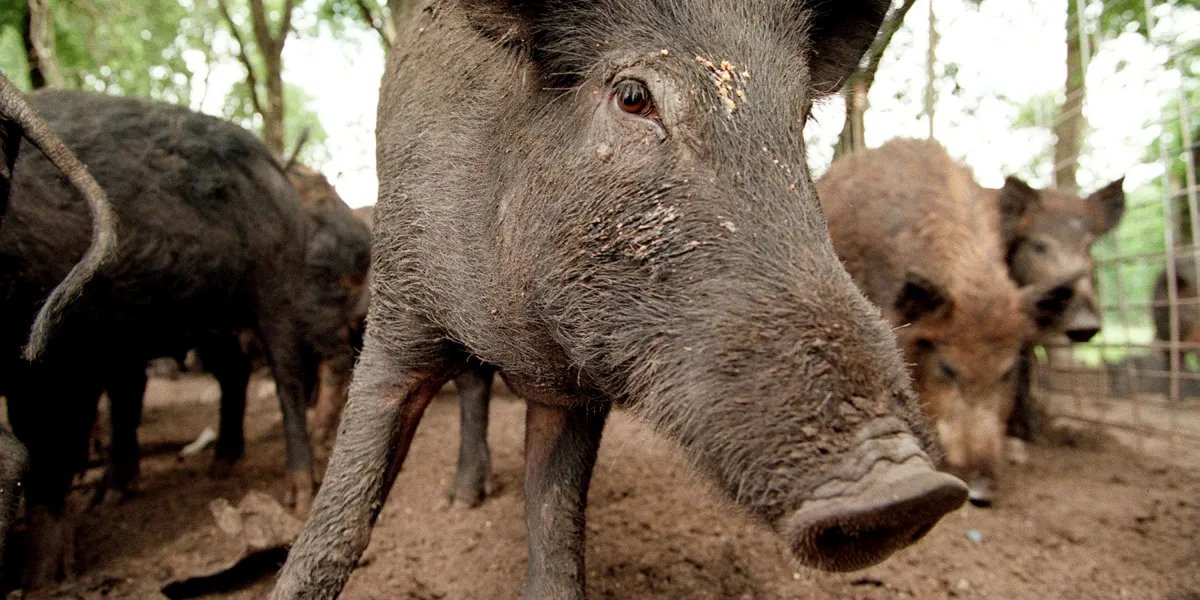
That program was active in selected counties in 10 hog-plagued states: Alabama, Arkansas, Florida, Georgia, Louisiana, Mississippi, North Carolina, Oklahoma, South Carolina and Texas. Starting in 2020, the U.S. Department of Agriculture funded private landowners’ purchases of trapping equipment, on-farm trapping efforts and restoration of land the hogs had damaged.
Originally slated to end in 2023, the program was given $105 million more to spend through 2029 in the major budget and immigration package Congress passed in July 2025. Through Sept. 21, 2026, the government is accepting grant applications for the first $35 million allocation from that money.
A useful question, before spending all that money, is how effective the first test of the program was.

Reducing hogs’ damage to cornfields
Our research team of agricultural economists at the University of Tennessee and the University of Arkansas set out to examine the program’s performance.
We used federal data on crop insurance claims to compare crop damage in counties where the program was active against counties where it was not, both before and after the federal trial began.
Not all the counties reported crop damage from wildlife. Among those that did, counties where the program wasn’t operating had crop insurance claims for wildlife damage to corn that averaged 70 acres (17.5 hectares) per policy.
In counties where hog eradication efforts were coordinated, however, the average claim for cornfield acres damaged from wildlife declined to 10 acres per policy. That is a statistically significant result – and given the scale of corn production across the study region, it represents a meaningful reduction in losses.
When comparing crop insurance claims for soybeans, wheat, cotton and peanuts, however, we found no difference between counties with active hog control efforts and those without.
A way forward
Corn is reportedly the crop most commonly damaged by feral swine. That could help explain why we found cornfields to have the only statistically significant reduction in damage.
More generally, the program’s effectiveness may have been more limited because it launched during the COVID-19 pandemic, which restricted the community meetings and public outreach that could have boosted landowner participation. Also, the fact that it was a pilot effort may have made people reluctant to commit, fearing the program might disappear in a few years.
It is likely our study underestimates the benefits of the program. Some farmers have crop damage that is not severe enough to warrant an insurance claim, so those numbers are excluded from our analysis. And our study did not evaluate any potential changes in noncrop damage from feral hogs, such as to property, livestock, recreational parks and the environment in general.
Our research indicates the hog control program can be effective and offers several ideas for improving it, both over time and with more funding. For instance, if the efforts focused specifically on corn-producing counties, it might yield more success per dollar invested. And expanding participation through additional outreach efforts could mean more hogs are caught or killed across a wider area, amplifying the return further.
Feral hogs will be nearly impossible to eradicate completely, and the damage they cause isn’t going away either. The data suggests that with the right design and sustained investment, the federal government has a program that can make a real difference for America’s farmers.
Chris Boyer, Professor and Department Head, Agricultural and Resource Economics, University of Tennessee; Aaron Smith, Professor of Agricultural and Resource Economics, University of Tennessee, and Eunchun Park, Assistant Professor of Agricultural Economics and Agribusiness, University of Arkansas.
This article is republished from The Conversation under a Creative Commons license. Read the original article.