With YouTube recently updating how it calculates video views, brands and marketers may need to reconsider what a view actually is, and what it means from an engagement perspective.
That’s because the definition of a view can vary significantly, even within each platform.
For example, on YouTube:
- View: Whenever a video is on screen and plays for more than a second
- Engaged view: When a viewer watches past the initial frame, or actively clicks to watch a clip
- Qualified view: Engaged views on public long-form videos or archived livestreams
Essentially, the definition of what view count means can vary significantly, depending on the context. That can be confusing, even with YouTube moving to make its views better align with the measurements of other apps.
To provide more perspective on this, Axios reporters Sara Fischer and Kerry Flynn outlined how each social platform currently measures a view across different formats and types, and what that means in varying contexts.
Social media commentator Matt Navarra also shared a simplified graphic depiction of this, which makes it easier to compare the various platform measurement approaches.
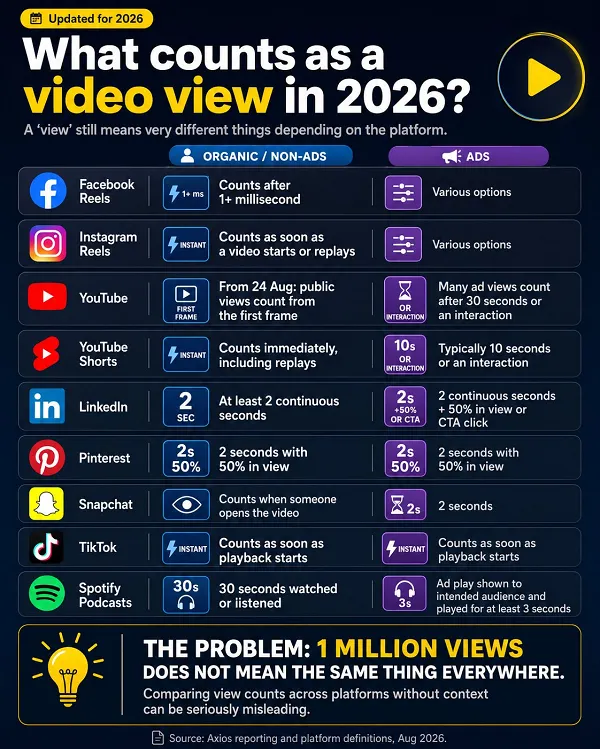
As per the above, there are various gray areas within these definitions, and what exactly a view means depending on the context and placement.
In other words, view count may not be entirely indicative of engagement, and may not be the best measurement of interest. Depending on how it’s used, it’s important for marketers, in particular, to understand the context of these figures.
It’s also relevant for brands that are negotiating partnership deals and arranging sponsored content. YouTube’s change in methodology could see a lot of creators looking to promote their rising view counts as a key opportunity, but the real reason for that rise may simply be a counting update.