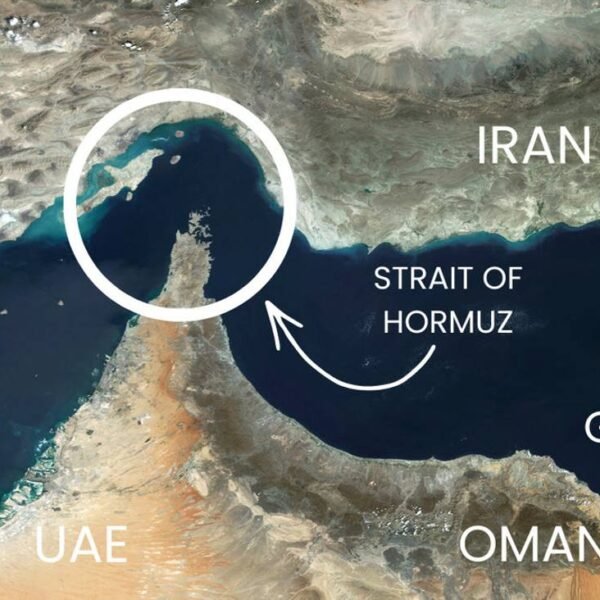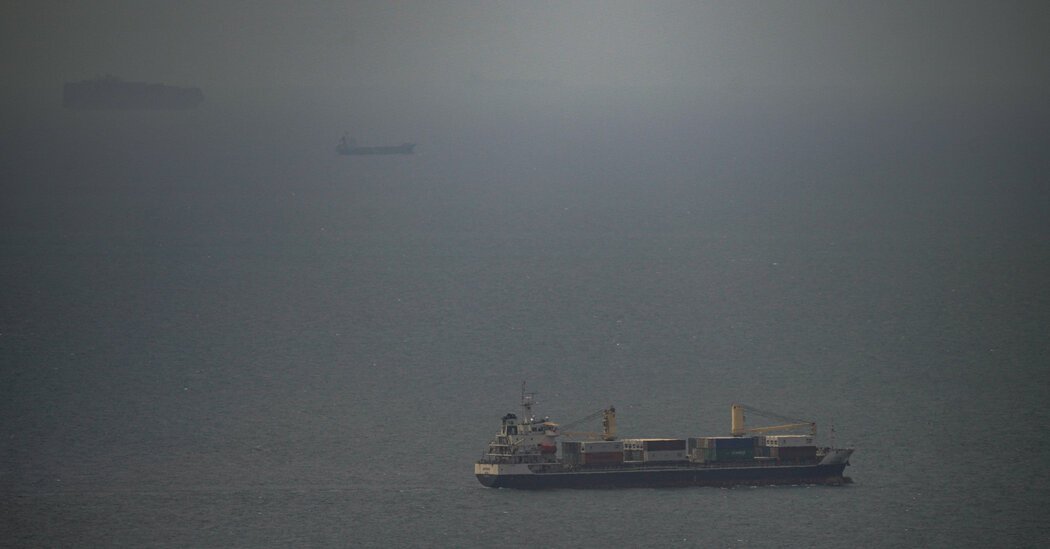
The number of ships passing through the Strait of Hormuz has become a barometer of how the U.S.-Israeli war on Iran is affecting the global economy.
On Tuesday, after nearly eight weeks of war, that number was one, according to S&P Global Market Intelligence. Then Wednesday, more ships tried and Iran attacked two cargo vessels in the strait.
“They are reminding us that their threats to attack ships are genuine, and that’s enough to suppress traffic through the strait,” said Rosemary Kelanic, a director at Defense Priorities, a research organization focused on foreign affairs. Ships linked to Iran have passed through the strait, ship tracking data shows.
The latest attacks show that Tehran still has a stranglehold on the strait that allows it to ratchet up the pain on the global economy, even though the U.S. military has struck some 13,000 targets in Iran and set up a naval blockade against it. This strategic move gives Iran leverage in any talks with the United States to end the war.
In normal times, about a fifth of the world’s oil supply and a significant share of its natural gas went through the strait on ships. But with that supply stalled, the prices of gasoline, diesel and gas used for cooking and home heating are rising around the world, piling new costs onto businesses and consumers.
While the United States and Israel have said that they wanted to end Iran’s nuclear program and depose its leaders, Tehran has made it into a war that is also about shipping.
For decades, it made more economic sense to transport oil in tankers the length of three football fields rather than pump it through overland pipelines. While such pipelines exist and are carrying more oil since the war began, those extra flows don’t make up the shortfall created by the waterway’s closure. All told, there has been about a 10 percent reduction in the supply of oil to the world, according to data from the International Energy Agency.
An average of around eight ships a day had been passing through the strait before the latest attacks, down from 130 a day before the war.
Then on Friday, after Iran and the United States said the waterway was fully open, many ships started to move toward the strait with the apparent aim of passing through.
But hours later, Iran said it would crack down on ships entering the strait because the United States had not ended its blockade of Iranian vessels, southeast of the Strait of Hormuz in the Gulf of Oman.
The few hours that the strait seemed to be open, Michelle Wiese Bockmann, an analyst at Windward, a maritime analysis firm, saw many ships positioning for an exit.
But after reports on Saturday that Iran had attacked a ship, she said, tracking software showed 33 vessels stop their attempts at passage. “What I saw on Saturday morning was nascent confidence,” she said, “Then, literally, before my eyes, I saw everything start to turn around.”
Ms. Wiese Bockmann said 12 ships with no apparent links to Iran had made it through.
Even those vessels typically get Iran’s permission to make the passage, and Iranian authorities demand that they take a route that runs close to Iran, rather than the two main lanes through the middle of the strait used before the war, which began on Feb. 28.
“There is no freedom of navigation,” Ms. Wiese Bockmann said.
On Wednesday, Iranian news media named the two cargo vessels targeted as the MSC Francesca and the Epaminondas. MSC, based in Switzerland, is the world’s largest container shipping company. It did not respond to requests for comment.
Technomar Shipping, the Greek manager of the Epaminondas, said in a statement that the vessel was attempting to pass through the strait “when it was approached and fired upon by a manned gunboat.” It said that the crew were safe, and that there were no reports of injuries or water pollution.
More Iranian-linked ships have been going through the strait than those with no links, according to data from Lloyd’s List Intelligence. From March 2 through Sunday, 308 ships with Iranian links went through, or an average of six a day, according to Lloyd’s List. They were either carrying Iranian cargo, included on an anti-Iran sanctions list or acting in such a way — for instance, turning off their transponders to hide their locations — that strongly suggested that they were doing business with Iran.
Over the same period, 90 ships with no such links to Iran went through the strait, or an average of three a day, according to Lloyd’s List’s data.
To try to stop the Iranian ships, the United States set up a blockade on April 13. One of its aims was to cut off Iran’s oil exports, which were bringing in valuable revenue for its war-stricken economy. Before the blockade, Iran was exporting roughly as much oil during the war as it was before.
The U.S. military has said no Iranian ships have gotten through the blockade, and it seized an Iranian tanker on Sunday attempting to do so. U.S. Central Command said on Wednesday that it had turned back 29 vessels.
But Lloyd’s List’s analysts say seven Iranian-linked ships have passed through both the Strait of Hormuz and the blockade since April 13.
Capt. Tim Hawkins, a spokesman for Central Command, on Wednesday disputed Lloyd’s List’s analysis and stood by its earlier statement that the blockade had not been evaded by Iranian-linked vessels.
Ships with no links to Iran are free to go through the U.S. blockade, with some U.S. destroyers reportedly more than 400 miles away. Though Central Command is not providing warships to escort vessels that want to go through the Strait of Hormuz, its top officer said on Friday that it now has attack helicopters in the waterway.
“We also have AH-64 Apaches in and around the Strait of Hormuz providing a visible presence and deterrent as we advocate for the free flow of commerce,” Adm. Brad Cooper, the head of Central Command, said.
But the lack of a large U.S. naval presence in the strait shows that the Iranians still pose a threat there, some analysts say.
“It’s not going to reassure anybody to start up shipping again through Hormuz if the U.S. Navy itself refuses to operate in Hormuz,” said Ms. Kelanic, the analyst.
As long as Iran keeps up its attacks, shipping companies are likely to stay away. Anders Boenaes, the senior managing director of the German shipping giant Hapag-Lloyd, said there had been an expectation that it would be relatively quiet on Tuesday night because it was the eve of possible U.S.-Iran negotiations. Instead, ships were attacked early Wednesday.
“It makes the situation more unpredictable when warnings are not given before attacks are taking place,” Mr. Boenaes said in an interview.
Jenny Gross contributed reporting from Hamburg, Germany; Eric Schmitt contributed reporting from Washington.