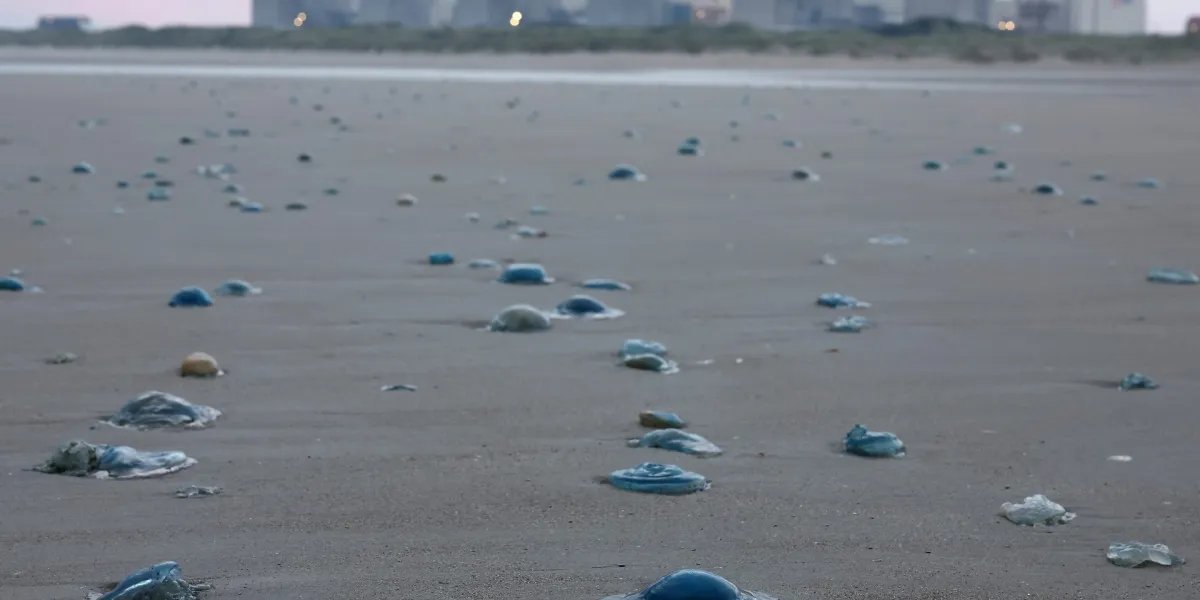
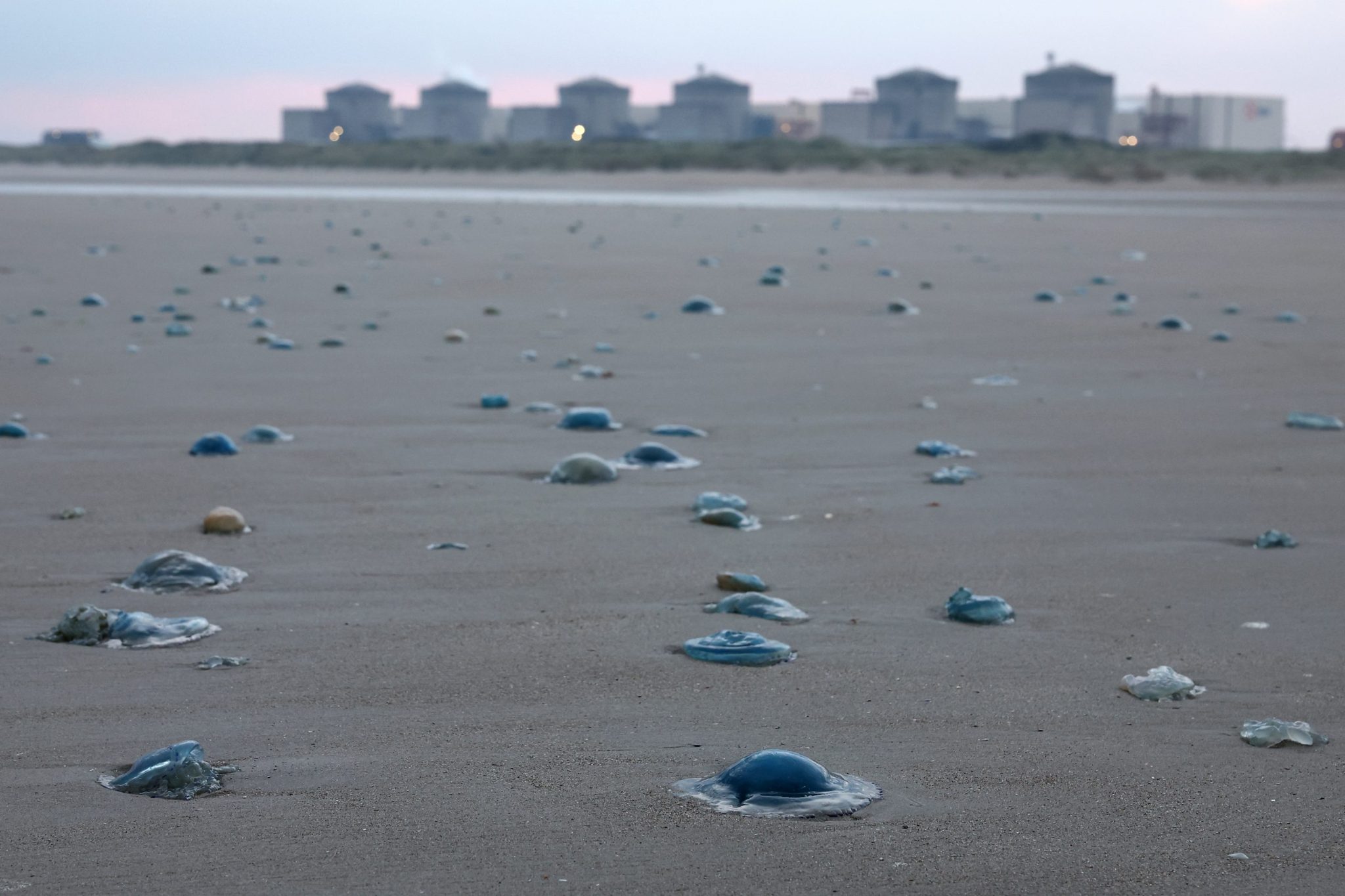
A “massive influx” of jellyfish has forced Electricite de France SA to shut three units at its Gravelines nuclear power plant and reduce output at a fourth, curbing power supply at a time when extremely hot weather is boosting demand.
That’s taken some 3.2 gigawatts of capacity offline, with parts of the country forecast to see temperatures near 40C in the coming days.
A series of heat waves have scorched Europe this summer. Unusually high temperatures off the coast of France can cause jellyfish populations to “bloom.” Pumping stations for coastal nuclear plants like Gravelines usually draw in seawater for cooling, sometimes exposing them to marine life.
Read More: Europe’s Fifth Heat Wave Risks Straining Rivers, Power and Crops
The disruptions started on Monday, and two of the reactors are scheduled to come back online by Wednesday night. The other two, which total 1.8 gigawatts, could stay offline until the end of the week, according to regulatory filings.
EDF is already facing large curbs at other nuclear sites located on rivers as the high temperatures mean the water cannot effectively cool the reactors without causing environmental damage.
The Gravelines site is on France’s northern coast. Last year, it faced similar problems when swarms of jellyfish clogged up filter drums.