
White-collar workers have fallen into the mundane rhythm of office life: checking an endless stream of emails, sitting through a barrage of meetings, and pushing through mental fatigue by week’s end.
But some CEOs are rewriting norms of the corporate world, leading billion- and trillion-dollar companies on their own terms.
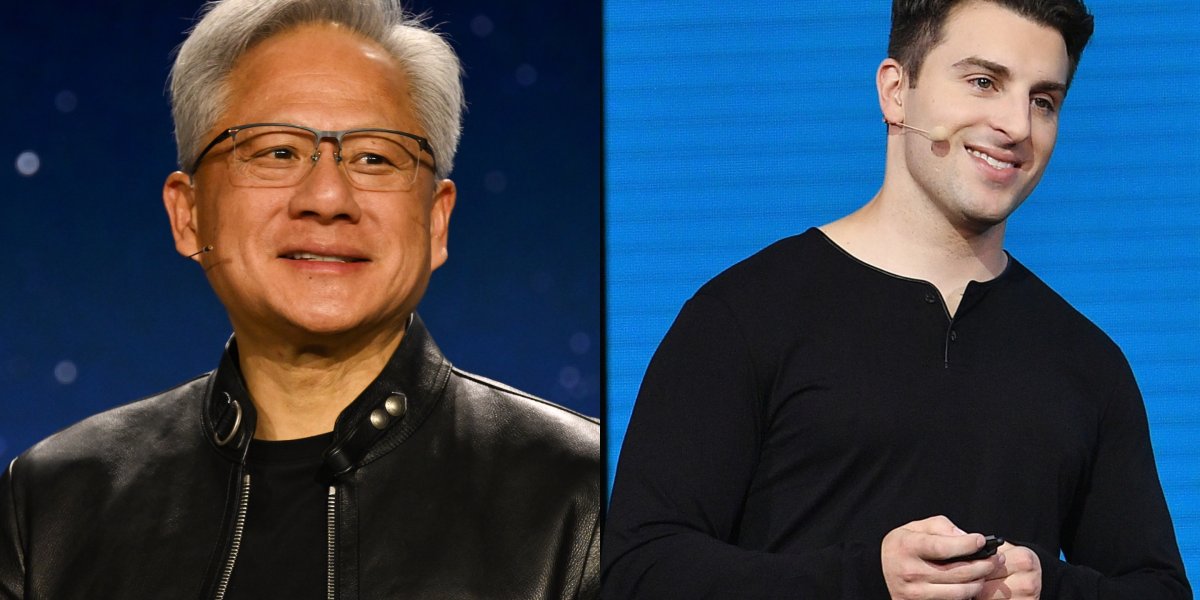
Nvidia CEO Jensen Huang: no one-on-one meetings
Huang, the cofounder and CEO of $4.8 trillion technology giant Nvidia, is trimming the fat from his work routine by prioritizing efficiency over regular check-ins.
The leader doesn’t believe that frequent catch-ups with his 55 direct reports are the best use of his time, given that a continuous stream of meetings would only clog up his work schedule and slow him down.
“I don’t do one-on-one’s with any of them,” Huang said at the Stanford Institute for Economic Policy Research summit in 2024.
His broader goal is to maintain transparency within one of the world’s largest companies.
“They never hear me say something to them that is only for them to know,” the billionaire continued. “There’s not one piece of information that I somehow secretly tell the staff; I don’t tell the rest of the company.”
Huang still has regular catch-ups with his executive team, and if an employee genuinely needs to get in touch with him, he’ll “drop everything for them,” the CEO added. However, limiting time-consuming meetings helps Huang and the company move faster in the AI race.
“In that way, our company was designed for agility,” Huang said. “For information to flow as quickly as possible. For people to be empowered by what they are able to do, not what they know.”
Airbnb CEO Brian Chesky: no emails or early-morning meetings
Chesky said that no leader should apologize for how they choose to run their businesses, and he’s unabashedly following his own advice.
For one, the chief executive of the $86 billion short-term rental platform no longer bothers with the bane of many workers’ existence: emailing. Instead, he texts and calls to get his job done.
“[Emailing] was the thing about my job that I hated the most before the pandemic,” Chesky told The Wall Street Journal last year.
And that’s not the only corporate norm Chesky has snubbed: the Airbnb CEO, who hits peak creativity late into the night, also doesn’t take meetings before 10 a.m. The rise-and-grind norm of Silicon Valley CEOs doesn’t apply to the self-made billionaire.
“When you’re CEO,” Chesky said, “you can decide when the first meeting of the day is.”
United Airlines CEO Scott Kirby: office power naps
Kirby said that an impromptu office nap is his trick to staying sharp over his decades-long career in business. He even slept on the floor until United staffers found out about his habit, and rushed to get him a couch for some quality shut eye.
The leader says taking a break keeps him fueled to run the $33 billion airline giant—and he picked up on a leadership hack. A “power nap” of 30 minutes or less boosts alertness and mood, improves mental clarity, and fights off fatigue, according to a 2024 study from Harvard Medical School.
“A thing I do that people have thought is weird is that, throughout my whole career, when I’m in the office, I’ll close the door and take a 20-minute nap,” Kirby recently said in an interview with McKinsey and Company.
“If I take a 20-minute nap, I’ve accomplished more than anything else I would have accomplished in that time,” the CEO explained. “When you’re tired, your brain is not 100%. If you’re not 100%, you shouldn’t be making decisions.”
Southwest Airlines CEO Bob Jordan: no meetings during afternoons
Jordan set a new rule for 2026: his calendar will stay completely clear every Wednesday, Thursday, and Friday afternoon. No meetings are allowed during those hours; the CEO is ensuring that there’s a block to “think about what’s important right now,” tossing aside traditional duties that can be a total time suck.
“When you first start, it’s easy to confuse busyness and going to meetings with leadership,” Jordan said at the New York Times DealBook Summit in 2025. “…Because what we all find, I’m sure, is there’s no time to ‘work,’ and you confuse going to meetings with the work.”
Jordan said that his boundary might sound “crazy” to fellow executives dipping in and out of daily meetings. However, the airline giant leader reasoned that CEOs are brought on to do work they’re specifically good at—which usually isn’t getting done during conversations that can eat up valuable time.
“It’s so that you can work on things you need to work on,” Jordan explained. “You can think about what’s important right now. You can call people you need to talk to.”
Twilio CEO Khozema Shipchandler: exercise between capped meetings
Shipchandler is “all for working smarter,” so he’s joining the legion of leaders who are being strict about their calendars. Like so many others, he’s selective about what meetings he attends and how long they last—and he uses the spare minutes to get a quick exercise in.
“I do not take meetings that I don’t think drive the ball forward for the company, or that don’t bring me energy,” Shipchandler told Fortune last year.
“I typically only do 25-minute meetings in a 30-minute slot, and I only take 50-minute meetings in an hour slot,” he explained. “And in the time in between, I’ll do maybe a quick lap around the house to get the blood flowing, or get some fresh air.”