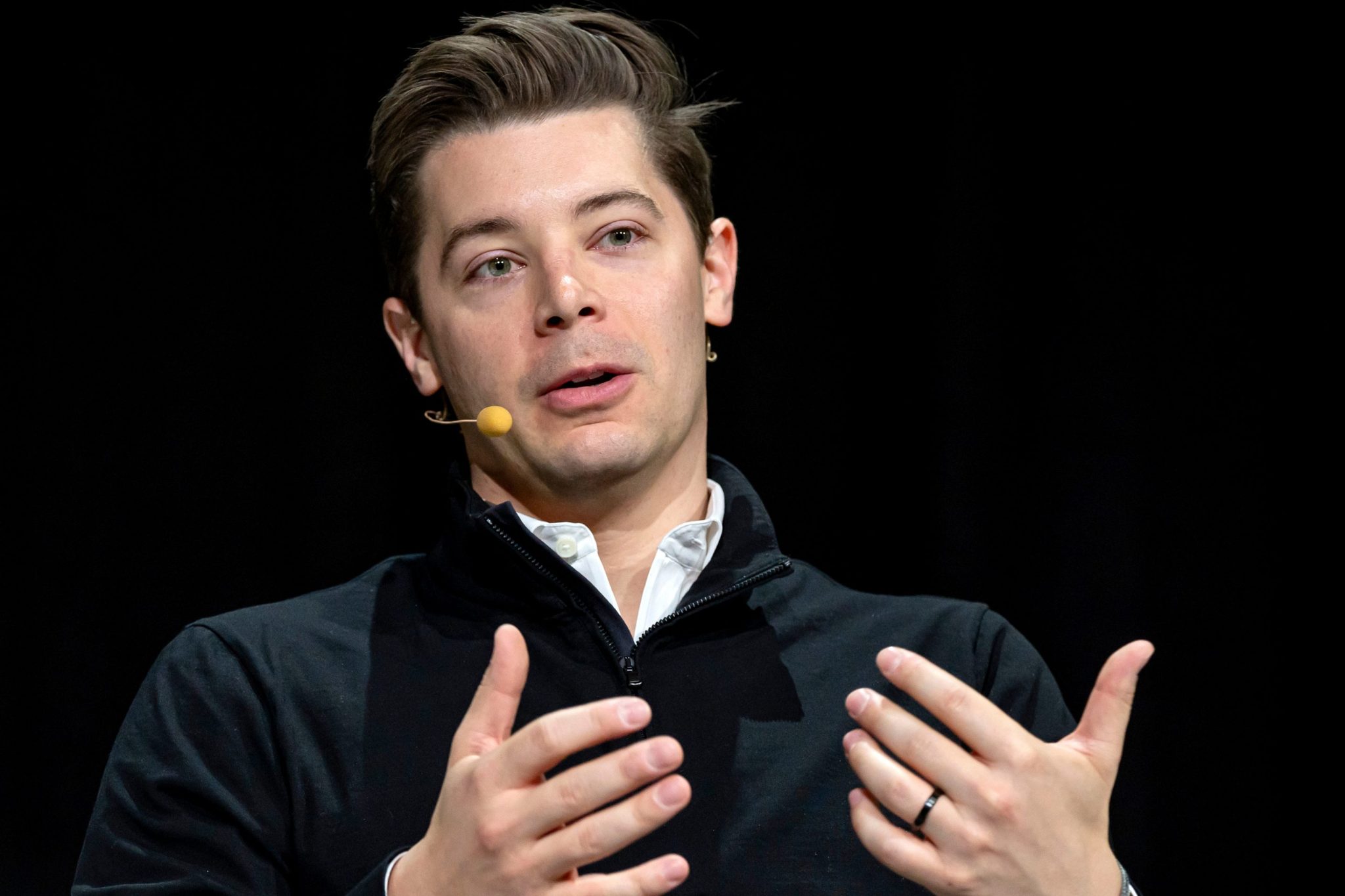
Brad Lightcap, one of the most recognizable faces of OpenAI’s senior leadership team, is leaving the company to “start something new,” he announced on Tuesday, representing the latest in a string of executive departures at the ChatGPT maker.
Lightcap did not say what the new venture is, but said he’s “not going far,” and described it as involving “a few important new things the world will need to get right” as artificial intelligence becomes more powerful and capable.
The departure comes as OpenAI is planning for an initial public offering that could value the San Francisco company at more than $1 trillion. It also comes as agentic AI models such as those made by OpenAI and Anthropic have come under increased scrutiny, following recent revelations that models from the two companies had managed to bypass safeguards and hacked into other systems.
Lightcap joined OpenAI in 2018, when few people could have predicted that the company would become a household name after the release of ChatGPT in late 2022. He went on to create the “first versions” of several operations and business teams, he said, including finance, legal, HR, corporate security, go-to-market, and partnerships.
“If you had told me then that we’d be where we are today, I wouldn’t have believed you,” Lightcap said in his announcement on X on Tuesday, which he also shared with the OpenAI team earlier today. “We grew from a small research lab to one of the most consequential companies of our time.”
Lightcap served as OpenAI’s Chief Financial Officer from 2018 to 2022. He was then Chief Operating Officer until April 2026, when he took on a new role focused on special projects, though he still reported to CEO Sam Altman.
Lightcap’s mind has begun to wander to matters outside of OpenAI in the past few months, he said. He’s been “focused on the next horizon,” and solving issues he says might “stand in the way” of achieving OpenAI’s vision of creating AGI, or artificial general intelligence, a still theoretical concept of AI that can match or surpass humans at most tasks. He did not elaborate, though it could relate to politics, infrastructure, public adoption, or any of the myriad challenges AI faces as the technology integrates into many aspects of society.
“I believe there are a few important new things the world will need to get right as we enter this next period,” Lightcap said. “I’ll have more to share soon, but I believe in OpenAI more than ever and am excited to help you all advance the mission from a different vantage point.”
Lightcap plans to remain at the company for a few more weeks. It would be a major shock if Lightcap joins a competing AI lab, though time will tell. CEO Sam Altman and president Greg Brockman have not publicly commented on Lightcap’s announcement as of this writing.
Many OpenAI executives have stepped down this year
It’s the latest in a string of high-profile departures at OpenAI, and across the AI industry more widely, with Google DeepMind CEO Demis Hassabis stepping down this week as well.
In April, three OpenAI executives announced their departures, including Bill Peebles, who led OpenAI’s now-dead Sora video app, Kevin Weil, the vice president of OpenAI for Science, and Srinivas Narayanan, CTO of B2B applications.
In June, Barret Zoph, the head of enterprise sales, left OpenAI for a second time. Zoph first joined in 2022, then left in late 2024 for a position at Thinking Machines Lab, a startup founded by former OpenAI CTO Mira Murati. He returned to OpenAI in early 2026, only to leave again five months later.
In early July, Fidji Simo stepped down as OpenAI’s CEO of Applications, followed by Johannes Heidecke, the head of safety. Heidecke’s departure came just a few weeks before the company confirmed its AI agents had hacked Hugging Face during internal testing.
Yesterday, The Financial Times reported that OpenAI’s head of ethics, Chloé Bakalar, had quietly left the company after less than a year, with no public announcement.
However, of all the departures, Lightcap’s is the most significant given his long tenure and role crafting so much of OpenAI’s foundational corporate structure. It is possible, if not probable, that Lightcap profited handsomely from the company’s recent buyout of employee shares through an internal tender offer, as Bloomberg reported.
Two former employees told Fortune that many people made out to the tune of $10 million through the buyouts, including those not in leadership positions. For someone like Lightcap who presumably accrued more shares at the highest appreciation possible, the payout would presumably be much larger.