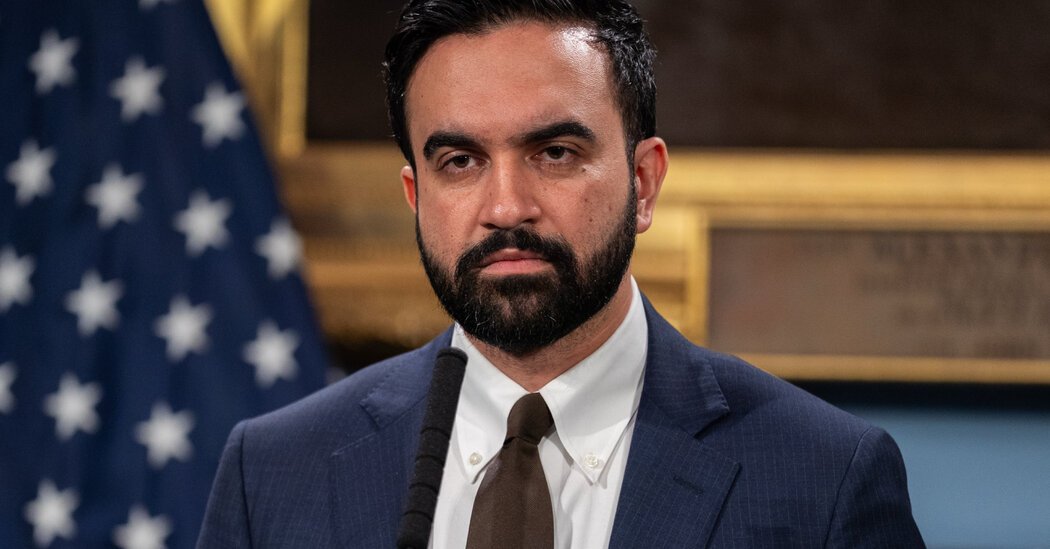
Mayor Zohran Mamdani on Friday is expected to veto a City Council bill that would have required the New York Police Department to publicize plans to deploy security perimeters around educational facilities during protests.
Mr. Mamdani signaled his intention to veto the legislation in a phone call on Friday with a prominent backer of the bill, according to someone familiar with the call.
The veto, which would be Mr. Mamdani’s first as mayor, was another sign of the growing tension between the Council and City Hall early in the mayor’s tenure.
A spokesman for Mr. Mamdani had no immediate comment.
“Ensuring students can enter and exit their schools without fear of harassment or intimidation should not be controversial,” the Council speaker, Julie Menin, said in response to the expected veto. “This bill simply requires the N.Y.P.D. to clearly outline how it will ensure safe access when there are threats of obstruction or physical injury, while fully protecting First Amendment rights.”
She is seriously considering whipping enough votes to override Mr. Mamdani’s expected veto, according to two people familiar with her plans. The bill passed four votes short of a veto-proof majority.
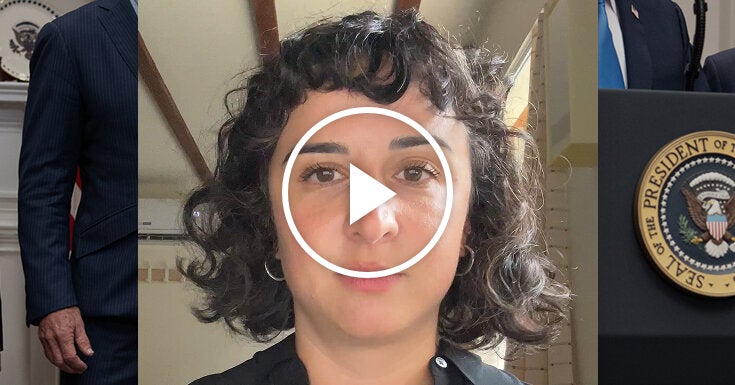
The relationship between the city’s leading Democrats has been tumultuous, with Ms. Menin appearing eager to position herself as a Democratic counterweight to Mr. Mamdani, and the mayor cutting a video to take shots at her response to his proposed budget.
Things appeared to thaw when Ms. Menin opted to back his pick to lead the Department of Investigation, an appointment that needs Council approval. And on Thursday evening, the two had dinner to discuss his pending veto and other matters.
But the issue of buffer zones, sparked after a protest outside a synagogue last fall, highlights one of their central points of disagreement: How to handle criticism of Israel that some people believe bleeds into antisemitism but others see as legitimate concerns about the military actions of a government that some experts have likened to genocide.
In response to Mr. Mamdani’s expected veto, Councilman Eric Dinowitz, who sponsored the bill, suggested that arguments against it have been made in bad faith.
“Should students be harassed on the way to school? I think the answer is no,” Mr. Dinowitz said, later adding, “There’s no text in the bill that restricts free speech.”
The bill passed last month by a 30-19 margin. It mandates that the Police Department present the mayor and speaker with a plan — which must then be posted online — to manage risks posed by protesters without infringing on their First Amendment rights. The police commissioner must also offer a public point of contact about any effort to mitigate a demonstration.
It was one of two pieces of related legislation that the Council passed in March over substantial opposition from the political left.
The other bill in the package imposed similar requirements on the Police Department regarding protests outside of houses of worship, but had been watered down from the original version introduced by Ms. Menin.
She had originally called for the police to secure a perimeter of up to 100 feet around houses of worship, citing a problematic protest outside a modern Orthodox synagogue on the Upper East Side of Manhattan last fall.
Some demonstrators gathered to protest an event hosted by the nonprofit organization Nefesh B’Nefesh, which helps North American Jews move to Israel, including to settlements in the occupied West Bank, where violence against Palestinians has been surging. The rally outside grew rowdy, with some chanting “death to the I.D.F.” and “globalize the intifada.”
But Ms. Menin agreed to pare down her bill after resistance from people in Mr. Mamdani’s administration, including Police Commissioner Jessica Tisch.
The two bills passed despite heated opposition from the political left, which argued that the legislation would serve only to increase the unnecessary policing of protests and stifle free speech. But the bill regarding houses of worship passed with a veto-proof majority, making it less vulnerable to the mayor’s objections.
Mr. Dinowitz’s legislation sparked particular ire because of its broad definition of “educational facility” to mean “any building, structure, or place where educational programming takes place.”
Civil libertarians argued that definition would encompass not only schools but also hospitals and libraries.
“Sending the message to New Yorkers that we have something to worry about with regard to protest by or near schools, libraries, teaching hospitals is absolutely the wrong message for these times, especially when the Trump regime is coming at protest with a sledgehammer,” said Donna Lieberman, executive director of the New York Civil Liberties Union.
In anticipation of Mr. Mamdani’s veto, a coalition of Jewish groups, including the UJA-Federation of New York, voiced disappointment with his expected action.
“At a time when Jewish and other communities across our city are facing heightened threats, this legislation represented a crucial step toward ensuring that every school and community institution can be better protected,” the coalition’s statement read, calling the anticipated veto “a profound failure of City Hall to demonstrate to all New Yorkers that our safety is a priority.”
As negotiations over the measure ramped up in recent weeks, several unions and the local chapter of the Democratic Socialists of America publicly opposed the measure.
In a letter they sent to Mr. Mamdani, they specifically cited union protests as a reason to oppose the legislation, though the bill includes a clause ensuring it would not “infringe upon rights guaranteed” under labor laws.
“Potentially barring anyone who is not on strike from joining a picket line gives management even more tools to suppress worker organizing,” read the letter, signed by the city’s D.S.A. chapter, a local branch of the United Auto Workers and other activist groups and unions.