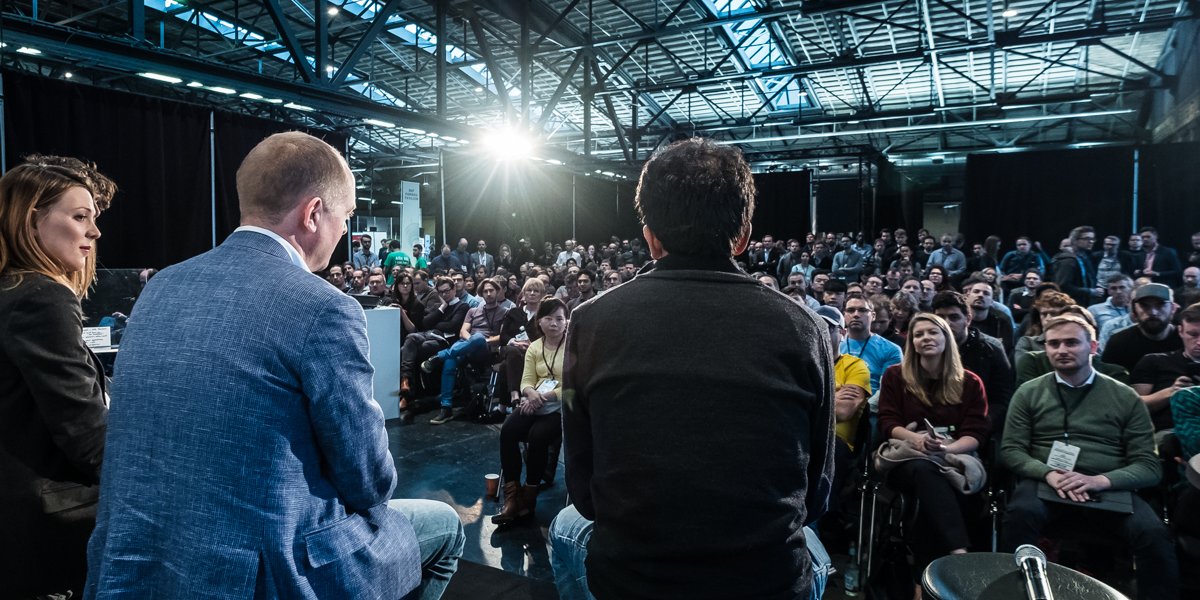
Clockout, a networking app designed for finding professionals, clubs and events nearby, looks to fix the loneliness syndrome plaguing young workers.
On Friday, it announced it has raised $3.5 million in total funding since it started, led by 114 Ventures, with investments from Evite Ventures, Allied Ventures, Sher Ventures, Gaingels, BMPB VC and others.
Founded by CEO Krishna Dosapati, the company lets users find nearby professionals and join communities and events organized around industries or interests. That puts it somewhere between LinkedIn and Meetup, she said.
Clockout went live in October 2024 and is built for users to browse professionals based on their work, interests and mutual connections. The idea is to give users a reason to meet someone offline rather than just adding a digital connection.
Dosapati’s pitch is simple: professional networking has become too dependent on digital platforms, while meeting people face-to-face has become more and more difficult, particularly for people who have moved to a new city or entered a new industry.
She encountered the problem firsthand after graduating from NYU and working in New York. Even though she already knew people in the area, she felt like her existing network became fixed—and it became impossible to meet new peers.
“I was like, if I faced this, how are younger people going to build their network, make friends and find a professional community?” Dosapati told Fortune.
Clockout says it reached $1.1 million in annual recurring revenue within 10 months of launching monetization with over 600,000 downloads to date, but it did not disclose the current valuation of the company.

COURTESY OF CLOCKOUT
According to Dosapati, the app currently uses a “freemium” model, where users can sign up for a $99 annual subscription that would provide additional features such as unlimited club and event access—while still allowing non-paying users to get value from the network.
Dosapati said the company found that reaching roughly 1,000 users in a single city can generate significant word-of-mouth growth. And in 2025, Clockout users sent nearly 400,000 invitations for other people to join the platform.
“The biggest issue in this space, as a working professional, is how do I actually find a community around my profession?” Dosapati said.
The loneliness epidemic
For young workers, the loneliness epidemic has meant building a career without face-to-face interactions, submitting resumes online blindly and typing up cover letters for nameless recruiters. The social infrastructure that previous generations have been able to lean on has been replaced.
According to Gallup’s latest global workplace data, 22% of employees under 35 experienced loneliness for much of the previous day in 2025. Remote workers reported loneliness at higher rates. And in the U.S., Gallup found that 29% of Americans between the ages of 18 and 29 experienced significant daily loneliness in the second quarter of 2025, compared with 21% of adults overall.
To be sure, companies are pushing to bring employees back into the office, confronting the issue head-on from COVID-era isolation. CBRE’s 2026 survey found that 89% of 97 office-using companies are requiring employees to be in the office at least three days a week, up from 78% a year earlier.
And the shift is happening outside the workplace as people look to find community in the era of loneliness. For example, run clubs have surged in popularity. Strava’s 2025 Year in Sport report found that the number of clubs on its platform nearly quadrupled during the year to 1 million. The run club company also found that 39% more Gen Z respondents than Gen X said they use fitness to meet people who share their interests.
That’s as loneliness has emerged as a health issue too, not just a professional or social problem. In 2023, then Surgeon General Vivek Murthy issued an advisory linking loneliness and social isolation to increased risks of heart disease, stroke, dementia, depression and premature death. He recommended participation in professional, community and other social groups as a way to build belonging and purpose.
“Given the profound consequences of loneliness and isolation, we have an opportunity, and an obligation, to make the same investments in addressing social connection that we have made in addressing tobacco use, obesity, and the addiction crisis,” Murthy wrote. “If we fail to do so, we will pay an ever-increasing price in the form of our individual and collective health and well-being.”