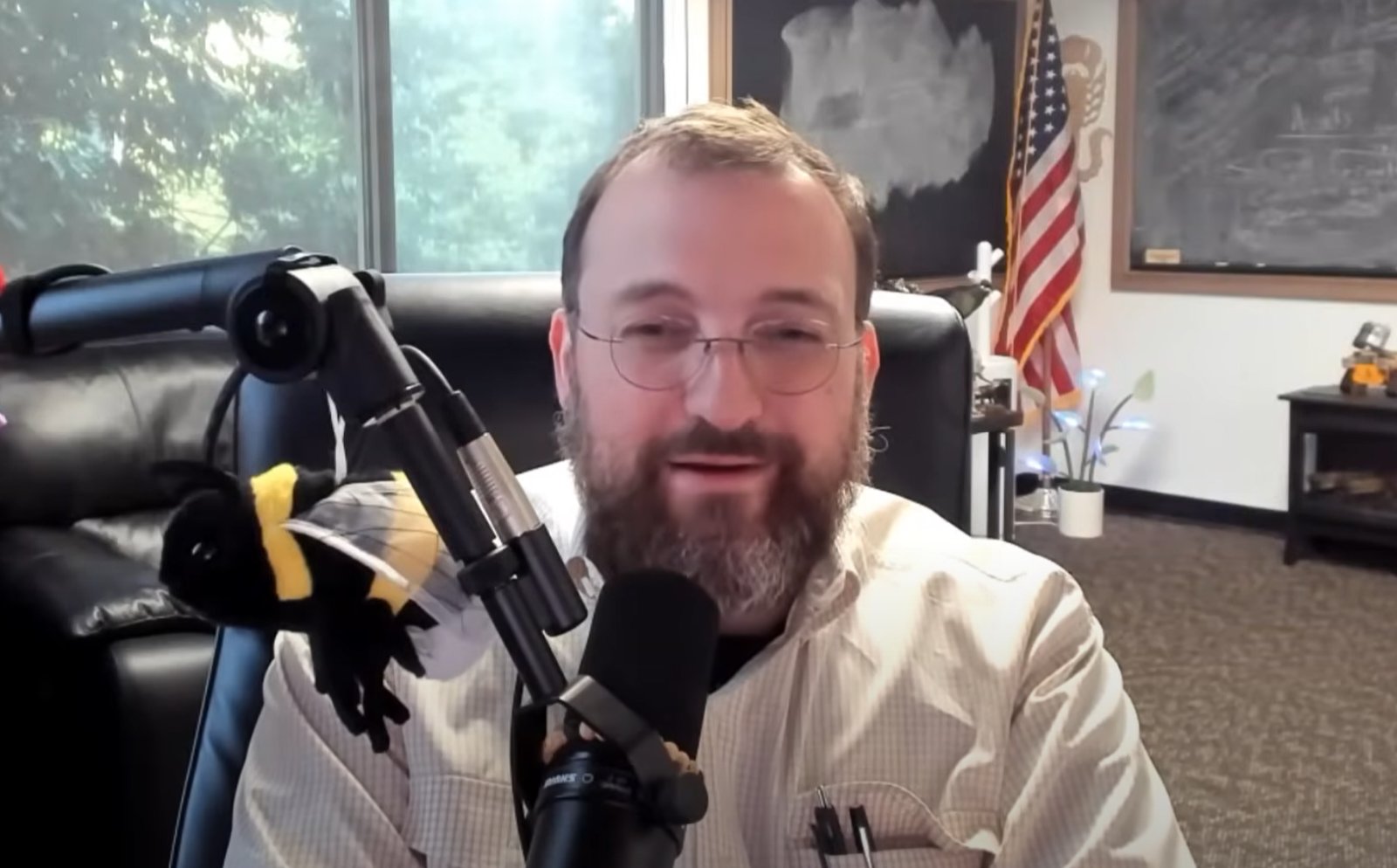
Elijah Lee has spent years listening to Virginia lawmakers talk about data centers. At 18, he’s done listening.
Lee is high school chapters coordinator for Voters of Tomorrow, a Gen Z–led political advocacy group. He lives in the state often called the data center capital of the world, since Virginia has more data centers than anywhere else on the planet. Now he’s helping young people across the country push back against them.
“It’s difficult to break the data center issue into one piece, but for young people, we know what data centers mean long-term,” Lee said.
He has plenty of company. A University of Pennsylvania Annenberg Public Policy Center survey conducted this summer found that 70% of adults under 30 oppose new data centers in their area. That compares with 61% of all adults and 57% of those 65 and older. The researchers called it a reversal of the usual pattern, in which younger Americans are quicker to embrace new technology. In Pennsylvania, the gap is wider still: 83% of likely voters ages 18 to 29 opposed data center development, according to a poll reported by The Philadelphia Inquirer.
Fortune has reported that Gen Z has become an organizing force behind the national backlash, and that opposition has spread well beyond the small share of Americans who actually live near a data center.
From the classroom to the council chamber
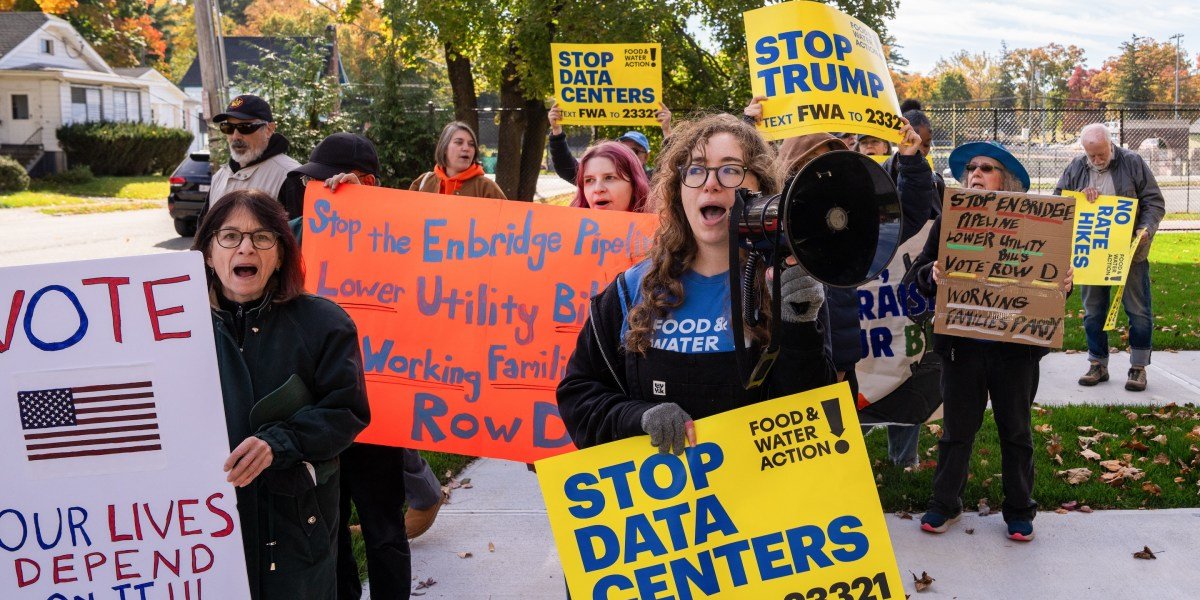
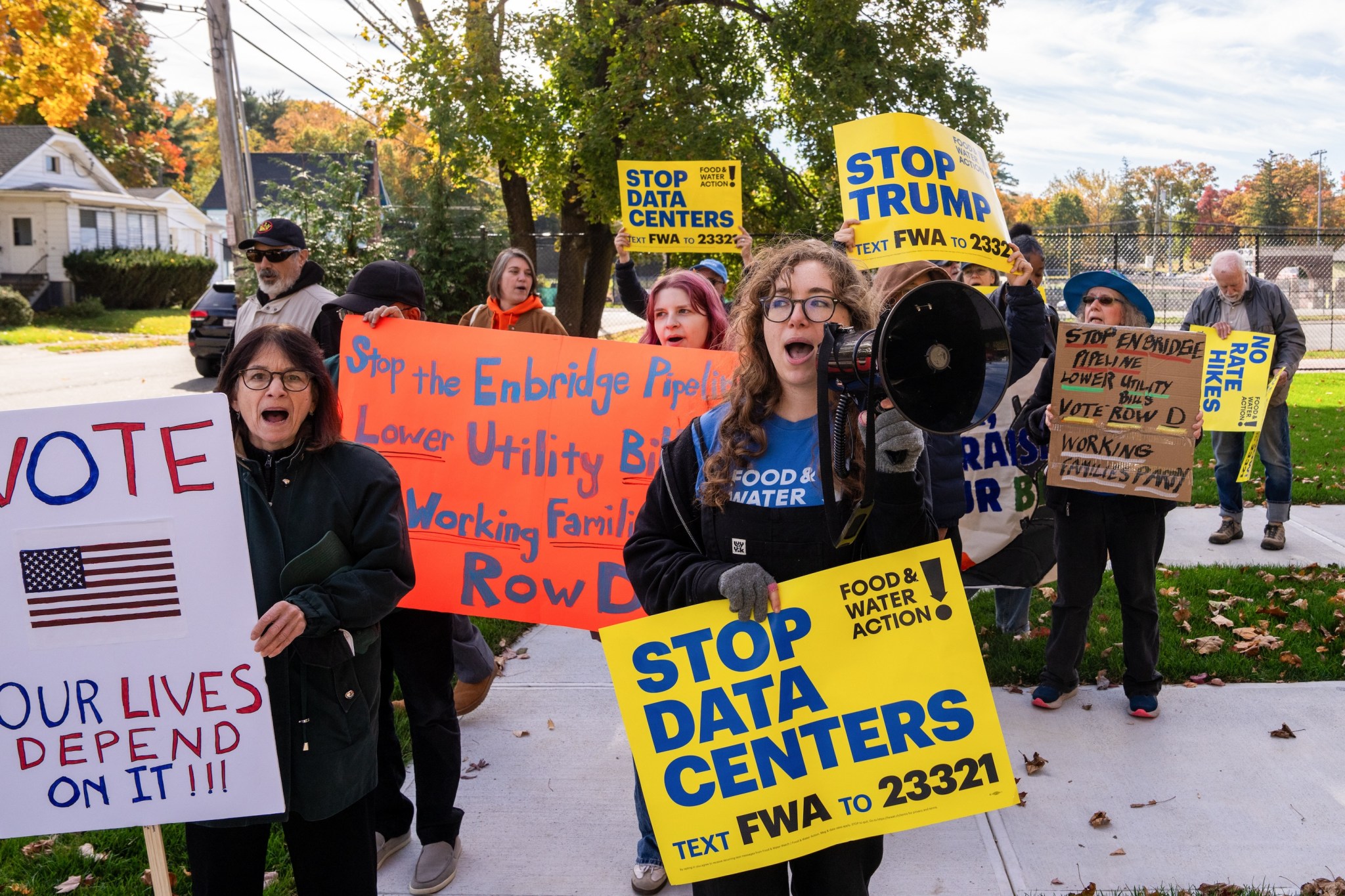
Voters of Tomorrow chapters are meeting with local officials, hosting voter registration drives on campuses and holding information sessions at high schools. When they ask young people what concerns them, Lee said, data centers come up again and again.
In Spartanburg, S.C., members of the group’s high school chapter spoke up about a proposed data center. Amid heavy public turnout, Spartanburg County Council delayed a final vote on a one-year moratorium in August. It then passed the pause 5-1 in September, though the ban doesn’t cover a data center already under construction there.
Scenes like that are playing out nationwide. On Monday night, a vote on a proposed Google data center in Hermantown, Minn., was postponed after two hours of protests. With the Nov. 3 midterms less than a week away, campaigns have spent $45 million this year on ads mentioning data centers, most of them in opposition.
“Data centers are making that much worse”
For Lee, the fight is about money first. He called out the old promise that if young people went to college, they would land a good job and eventually afford a house.
“This isn’t true for young people anymore, and data centers are making that much worse,” he said.
Data centers are far from the only reason. Fortune has reported that the facilities once helped hold power costs down before the current buildout threatened that trend. Still, their enormous appetite for power strains the grid.
A 2025 Bloomberg News analysis found that in some areas near significant data center activity, wholesale electricity costs were as much as 267% higher for a single month than they were five years earlier. Wholesale prices are only one part of a household bill, typically 30% to 50%, according to PolitiFact, so residential bills haven’t risen nearly that much. But experts told NPR that how much households pay varies by utility and state, and that residential customers will ultimately cover a share of the AI buildout. Economists have warned that lower-income households will feel it most.
Lee also worries that the industry’s demand for large tracts of land will make it harder for his generation to buy property.
“The idea of now having to grow up and compete in terms of water prices and energy prices with a tech company is not something I can say I’m excited about,” he said.
Water, noise and quality of life
Not all of the concerns are about money. Many data centers use large amounts of water to cool their servers. U.S. data centers directly used about 17 billion gallons of water in 2023, and that figure could reach nearly 73 billion gallons by 2028, according to Lawrence Berkeley National Laboratory estimates. In Spartanburg County, the developer of one project recently raised its projected water use from 459,000 gallons a day to as much as 1.6 million.
“Think about what having a million data centers does to the energy grid in 30 years,” Lee said. “Think about what it will do to our water and our ability to access clean water.”
Residents near some facilities also complain of constant noise from cooling equipment and backup generators. Civil rights groups have warned that data centers are often built in communities already burdened by pollution and climate risk.
“Young people know that data centers are going to destroy our communities, flat out,” Lee said.
They use AI. They just don’t want it built next door.
The young people leading the backlash aren’t anti-technology. In Deloitte’s 2025 Gen Z and Millennial Survey, more than half of respondents said they already use generative AI in their day-to-day work. Nearly three-quarters of Gen Z said they expect it to change how they work within a year. The Annenberg researchers found that how often someone uses AI didn’t predict whether they opposed a local data center.
Lee doesn’t see a contradiction. “We are not willing to take advantage of the tool that is AI so long as it compromises the livelihood of our fellow citizens,” he said. He wants regulations that make tech companies build in ways communities can live with.
Politicians are starting to listen
Several politicians who once wooed the industry have reversed course.
Pennsylvania Gov. Josh Shapiro championed a $20 billion Amazon data center investment last year. In August, he signed an executive order blocking new projects unless they meet stricter limits on electricity and water use, and removing them from the state’s fast-track permitting program. Shapiro faces Republican state Treasurer Stacy Garrity next week, and she has accused him of flip-flopping.
Texas Gov. Greg Abbott once called his state “the epicenter of AI development.” He has since paused environmental permits and grid connections for new data centers. On ABC’s This Week, he said developers had “dug their own grave” by failing to work with state and local governments.
In July, New York Gov. Kathy Hochul signed the nation’s first statewide data center moratorium. In September, California Gov. Gavin Newsom, who is term-limited, signed seven bills aimed at keeping data centers from passing their energy costs on to other ratepayers.
Even President Donald Trump, a champion of the buildout, wrote on Truth Social last week that large new data centers must generate their own electricity. He also said developers should pay host communities a “dividend.”
Whether the anger turns into votes is another question. In a recent Targoz poll, young voters ranked the cost of living and health care as their top issues. Electricity bills and data centers accounted for just 6% combined. Lee argues those are the same fight.
“Young people cannot afford to live this way,” he said. “Building a future where we can actually live means backing down on data centers.”