A bombshell White Coat Waste investigation released this week documents more than $225 million in new National Institutes of Health funding for dog and cat experiments awarded, supplemented, renewed, or extended since February 2025.
The total includes new grants and contracts, additional discretionary money for existing awards, and project extensions that keep taxpayer-funded laboratories running.
RFK Jr. promised a “dramatic reduction in animal testing” at NIH.
The receipts tell a different story.
A new White Coat Waste investigation has identified more than $225 MILLION in new NIH spending supporting experiments on dogs and cats since Robert F. Kennedy Jr. became HHS…
— White Coat Waste (@WhiteCoatWaste) September 10, 2026
By June, White Coat Waste had identified more than $150 million, and by early September the figure had jumped to more than $225 million, a roughly 50 percent increase.
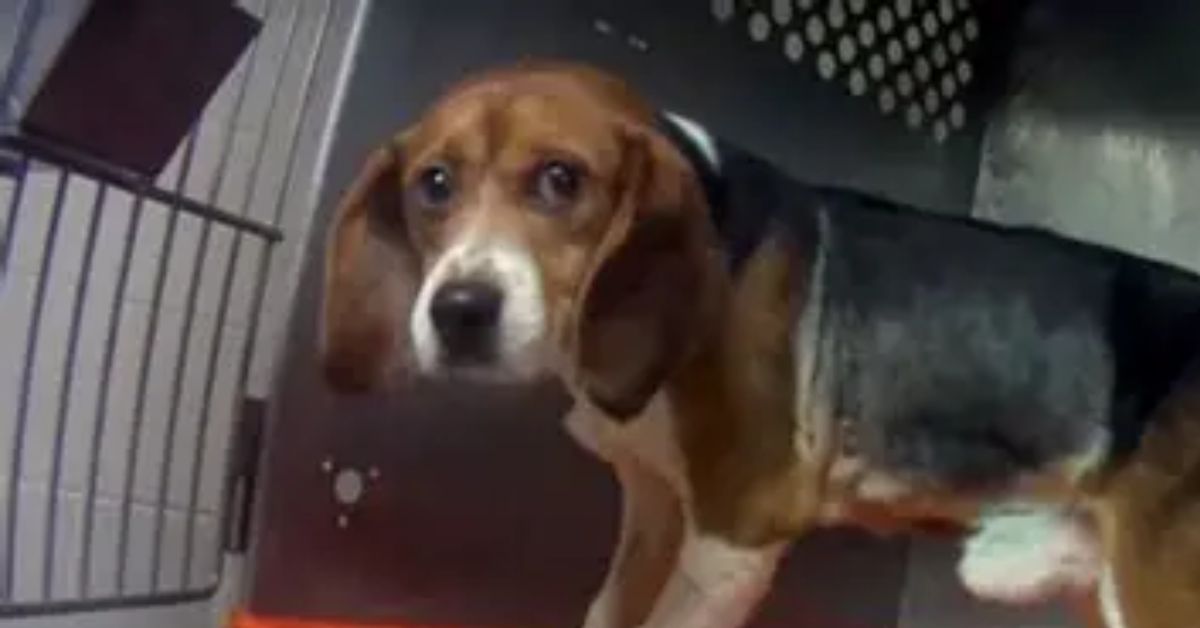
Nearly 44 percent of the identified spending, more than $98 million, went to pharmaceutical companies conducting dog tests. Another $11.7 million supported invasive cat experiments.
That $225 million-plus exceeds the NIH’s highly publicized $150 million investment in non-animal methods, or new approach methodologies, by more than $75 million.
The Trump administration has repeatedly moved federal research away from outdated animal models toward modern, human-relevant tools such as organoids, tissue chips, computational models, and real-world data.
Several agencies have already worked with White Coat Waste to deliver real results.
The NIH itself shuttered its last in-house beagle laboratory on the Bethesda campus in May 2025 after a nine-year campaign.
That intramural septic-shock program had killed more than 2,100 beagles over four decades and was scheduled to continue through August 2026, with 24 more dogs slated to die, until the administration ended it.
The Navy became the first federal agency to ban all dog and cat testing in May 2025, canceling a $10 million contract for constipation, incontinence, and erectile dysfunction experiments on cats and crediting the same watchdog investigations.
Days later, Congress also cut a joint NIH-Defense Department contract that paid for experimental drug tests on 300 beagles a week in a Chinese laboratory.
President Donald Trump signed the 2026 National Defense Authorization Act containing the first-ever congressional prohibition on Defense Department “painful research” using cats and dogs as live subjects, along with a ban on live-fire trauma training that shot and killed animals.
The Department of Veterans Affairs, already under a congressional deadline to end dog, cat, and primate research by 2026, closed its remaining primate studies ahead of schedule, ended cat experiments entirely, and slashed dog use dramatically. It was the first agency to treat lab-animal retirement as an ethical obligation.
The EPA reinstated first-term Trump-era goals to cut mammal testing 30 percent by 2025 and eliminate it by 2035, launched the agency’s first lab-animal adoption program, and expanded its list of accepted non-animal methods.
The FDA likewise announced a phase-out of animal testing requirements.
Those actions show that agencies can stop existing projects and block new ones when they choose to act.
At the NIH, however, the grant machine has not shown any sign of slowing down.
Records show a new grant of up to $2.4 million to the University of Minnesota for experiments on 60 kittens as young as two months old that include drilling holes in their skulls, injecting viruses into their brains, inducing strokes, and killing them.
A $439,016 award went to the University of Wisconsin-Madison to maintain a colony breeding nearly 300 kittens with glaucoma, some of which are killed before they are one day old so their eyes can be dissected.
Vanderbilt University received approximately $3.9 million, including a new five-year grant approved in February 2026, for glucose experiments that put dogs on high-fat, high-fructose diets to induce obesity, diabetes, and liver failure before inserting catheters and harvesting tissue.
Roughly $2 million flowed to the University of Utah for heart studies that tie off arteries, implant pacemakers and electrodes, deliver electric shocks and radiation, then harvest the dogs’ hearts.
An additional $1.9 million went to a University of Missouri laboratory that infests beagles with ticks.
Temple University received $305,627 to sever cats’ spinal cords and force them to walk on treadmills.
A new $7.2 million contract supports a University of North Carolina colony breeding puppies with bleeding disorders.
Syntis Bio got $916,400 to force-feed experimental weight-loss drugs to beagles.
Dozens of Small Business Innovation Research awards totaling tens of millions more pay pharmaceutical firms to run investigational new drug studies on dogs for conditions ranging from cancer and ALS to opioid-use disorder.
NIH officials, including Fauci-fan girl Deputy Director Nicole Kleinstreuer, have said they are working to phase out certain animal tests and that much of the activity predates the current administration. White Coat Waste notes that while some projects began earlier, the agency retained full discretion over whether to issue new awards, add discretionary funds, renew grants, or extend contracts after February 2025.
Those decisions continued.
White Coat Waste, which previously forced the cancellation of nearly $2 million in planned Fauci-era beagle experiments in 2022, argues that a genuine phase-out requires an immediate halt to new dog-and-cat grants and contracts, a ban on supplements and extensions, and an enforceable deadline with measurable spending cuts rather than press releases about future intentions.
Other agencies under the same administration have already proven the cruelty can be stopped. It is time for NIH to catch up.
White Coat Waste said in a statement:
White Coat Waste’s landmark BeagleGate campaign already proved that NIH can cancel planned dog experiments when it chooses to act. In 2022, following White Coat Waste’s investigation and bipartisan pressure, NIH canceled nearly $2 million in planned Fauci-funded beagle experiments.
Now, NIH must stop issuing new grants and contracts for dog and cat experiments and prohibit supplements, renewals, and extensions that continue existing projects. A credible phase-out requires a clear, enforceable deadline, measurable results, and real spending cuts — not NAMs, vague promises, or press releases.
Congress and taxpayers must hold NIH leadership accountable for ensuring that its funding decisions match its public commitments.
Until the spending stops, Secretary Kennedy’s promised phase-out remains only rhetoric.
The solution is simple: Stop the Money, Stop the Madness!
Ad block users: Some site features may not work correctly while an ad blocker is enabled, because they break scripts and content this website depends on. If you can’t see comments below, for example, please disable your ad blocker.