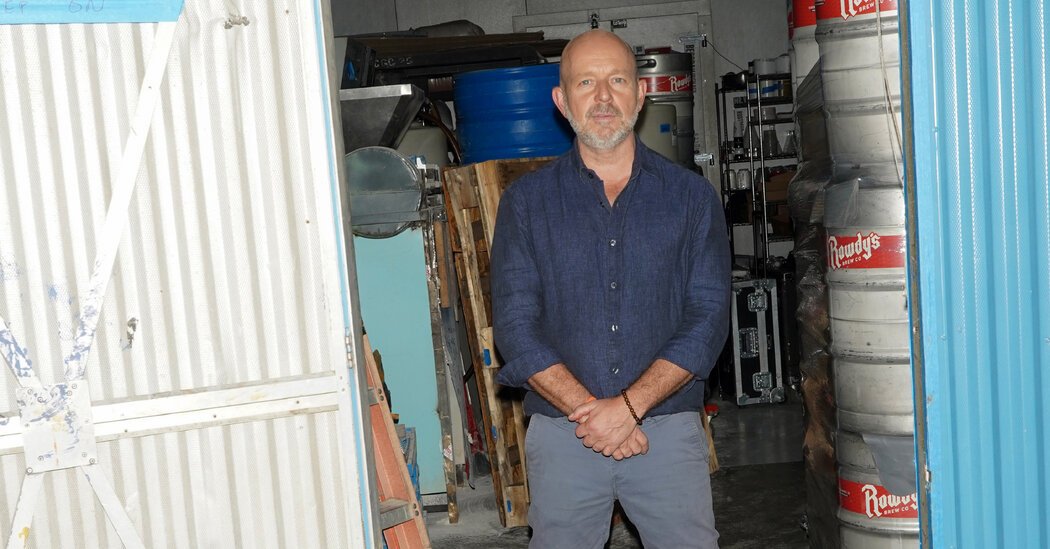
Mr. Hilton came to public notice in 2006 as the chief strategist to David Cameron, who had just been elected Conservative Party leader. Mr. Hilton, a close friend of Mr. Cameron’s since the early 1990s, was tasked with rebranding the party. His main innovation was to associate the Tories with nature and environmental concerns. The Conservatives changed their logo from a hand carrying a torch to an oak tree and promised a “new green revolution.” Mr. Cameron began cycling to the office; on a trip to the Arctic, he posed for pictures with huskies. He started saying nice things about the National Health Service and multiculturalism. By 2010, the Conservatives were ready once again for office. The quirky Svengali had done his job.
Mr. Hilton is so associated with the project to detoxify the Tories that many have struggled to understand his conversion to MAGA politics. How could the man who made Mr. Cameron hug huskies embrace the “drill, baby, drill” vulgarity of Mr. Trump? But the truth is that he was always more Trumpy than his progressive-seeming marketing suggested. Beneath his attempts to soften the image of the Conservatives lay a coarser vision that, in the age of Trump, is all too recognizable: a norm-shattering quest to dismantle the state as quickly as possible, with no heed for consequences. He proves that the febrile and fanatical energy of Trumpism predates the president.
Mr. Hilton always craved creative destruction. He merely lacked the language for it. He called for up to 90 percent of the British Civil Service to be fired, in line with the much smaller work force that had overseen the country’s vast empire in its 19th-century heyday. When the Conservatives slashed the welfare budget by 18 billion pounds in two years, he called for a further 25 billion pounds to be cut — a figure that even the Conservatives’ miserly welfare minister called “absurd.” He also proposed a scheme called the Red Tape Challenge, in which the government would list over 20,000 regulations online and the public would vote on which ones to eliminate. That only the last of these ambitions was indulged was proof, in Mr. Hilton’s eyes, of the deep state’s insidious power.
And so, in a huff, he left and headed for California.
Mr. Hilton had a soft landing on the West Coast. His wife, Rachel Whetstone, a fellow Briton whom he’d met while working for the Conservative Party in the 1990s, had a job at Google’s main office as the company’s head of communications and policy. They soon settled in Atherton, an enclave for billionaires in Silicon Valley.
With time and space, Mr. Hilton began ingratiating himself with the tech elite. He taught at Stanford. He set up a digital platform, Crowdpac, which sought to democratize — and monetize — small-scale political donations and granted him the status of tech founder: an essential step on his path to Californian assimilation. He also wrote a book, “More Human,” which was full of platitudes about how start-ups and digital innovation can replace government services and bureaucracy. But business and books were never going to be enough for him. He hankered for a return to the political fray.