As American warplanes pummeled targets in Iran in early March, just nine days after the war began, President Trump told the world that U.S. forces were already closing in on a quick, decisive victory. “We’re achieving major strides toward completing our military objective,” he declared to reporters in Florida. “And some people could say they’re pretty well complete.”
Three months later — after weeks of tough talk, the deaths of 13 Americans and thousands of Iranians, the expenditure of countless munitions and at least $29 billion in taxpayer money — the stated goals of the war have not been met. The theocratic regime in Tehran remains in place. Iran’s stockpile of highly enriched uranium sits underneath rubble in tunnel complexes. Its military maintains a robust drone and missile capability.
How did the world’s richest nation armed with the most powerful military arrive at this strategic defeat? Mr. Trump waged war on an enemy that didn’t have to win, but only had to hold on. He chose to team up with a partner, Israel, that had a different strategic aim, of maintaining an upper hand against enemies in a region rife with rivalries that stretch back generations. And he wanted to play peace broker more than any of the other warring parties did, rendering him more willing to make concessions.
In the end, the United States did not bring about the “unconditional surrender” that Mr. Trump demanded from Iran a week into the war, but rather a conditions-based, fragile truce. Along the way, the conflict exposed fundamental shortcomings in the U.S. military-industrial base, a vulnerability that analysts inside and outside the administration worry will embolden adversaries to act more aggressively. The unresolved issue of Iran’s near bomb-grade uranium, which the regime still controls, leaves American national security interests even further exposed.
This singular strategic defeat overshadows the U.S. military’s tactical victories since the war started on Feb. 28. The Navy’s blockade largely halted Iran’s economy-sustaining oil trade, causing the value of Iran’s currency to collapse to a record low. Withering airstrikes put a sizable dent in Iran’s conventional war-making capabilities by destroying much of its air force and navy. More than 13,000 military and industrial targets were hit and much of the Islamic Republic’s leadership was wiped out.
But Tehran’s resilience in the face of this onslaught has been equally remarkable. Despite the losses, the U.S. intelligence assessments in May estimated that Iran’s military retained about 70 percent of its missile stockpiles. After a U.S.-Israeli bombardment killed the supreme leader, Ayatollah Ali Khamenei, on the opening day of the war, the country quickly replaced him with his son, Mojtaba Khamenei, and the regime maintained its grip on the 90 million people living there. He’s unlikely to prove a malleable client willing to bend to American and allied influence after airstrikes killed his father and other family members.
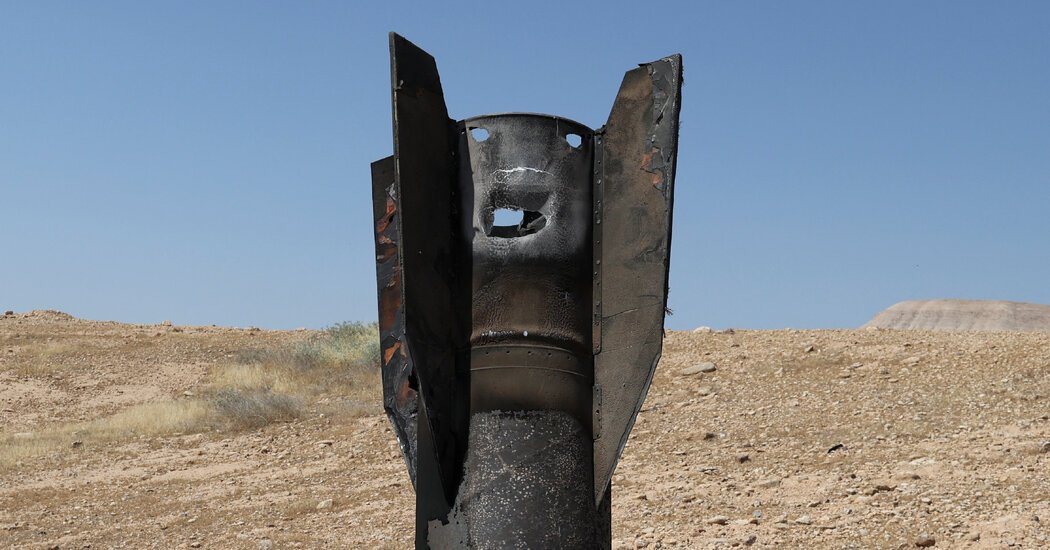
The predicament will not go unnoticed by regional allies who have welcomed U.S. forces and bases in their countries only to find themselves targets of retaliatory attacks. According to the Institute for National Security Studies in Tel Aviv, Iran has launched more than 1,500 missiles and 4,700 drone attacks across the Middle East over the last several months. The New York Times identified at least 17 damaged U.S. bases, embassies and other installations, which are vital for the United States to project power in the region. The bombardment has almost certainly raised broader questions among allies about the wisdom of hosting American troops if it puts their populations at risk.
Iran’s successful defiance has also raised new questions about the abilities of the U.S. military to sustain a prolonged fight. Yes, the wonder weapons that American industry cranks out, like cruise missiles and air-defense interceptors, have proven impressive on the battlefield. But the war has exposed the underlying weaknesses of depending on weaponry that’s extremely expensive and time-consuming to deliver. During an April 30 congressional hearing, Defense Secretary Pete Hegseth estimated it could take “months and years” to replenish the stocks that had been used in the war.
For Beijing and Moscow, this evidence of America’s military industrial weakness may catalyze decisions to move forward on their own strategic interests. Becca Wasser, a lead defense analyst with Bloomberg Economics, said the sheer amount of munitions used — particularly long-range missiles — has weakened U.S. military readiness and left the nation underprepared to deter and defend against, if needed, a more advanced adversary like Beijing. “China is definitely looking at U.S. munitions depth and the coming global crunch for air defense interceptors,” she said. “It may not be a today problem, but it’s definitely a tomorrow problem.”
The framework agreement the United States and Iran signed this week appears to have ended the war for now. Most details remain a secret. What is known, however, is that the Trump administration and Tehran have 60 days to hammer out a deal that could exchange billions of dollars in sanctions relief for a wide range of security concessions.
Among the largest questions hanging over the talks will be how to obtain Iran’s 970-pound stockpile of uranium enriched to 60 percent, secure the remaining 10 tons of other enriched material, put its functioning nuclear program under international inspection and curb its ability to sprint for the bomb for the foreseeable future. If that wasn’t enough, vexing challenges remain. The administration will also have to address Tehran’s missile production and enduring support for terrorist proxy groups. Failing to halt both were among Mr. Trump’s criticisms of the Obama administration’s 2015 nuclear agreement.
If the American negotiating team achieves a breakthrough on these issues, and if Israel can hold off on additional military operations against Iranian proxies, then the world will be in a better place. “Those are big ifs, but if a final deal is achieved then Iran-U.S. relations would fundamentally change and then the war, with all its costs, would be worth altering the geostrategic map of the region,” said Ali Vaez, Iran project director for the International Crisis Group. “But undermining U.S. credibility and sapping its power to get a ‘memorandum of understanding’ that never translates into a sustainable deal is the definition of a strategic blunder.”
For now, the United States has to reckon with what has been wrought: thousands of casualties across the Middle East, spiking energy costs around the globe, and rising anxiety about what comes next. While both the United States and Iran are claiming victory, the world holds its collective breath that an enduring peace can settle in.