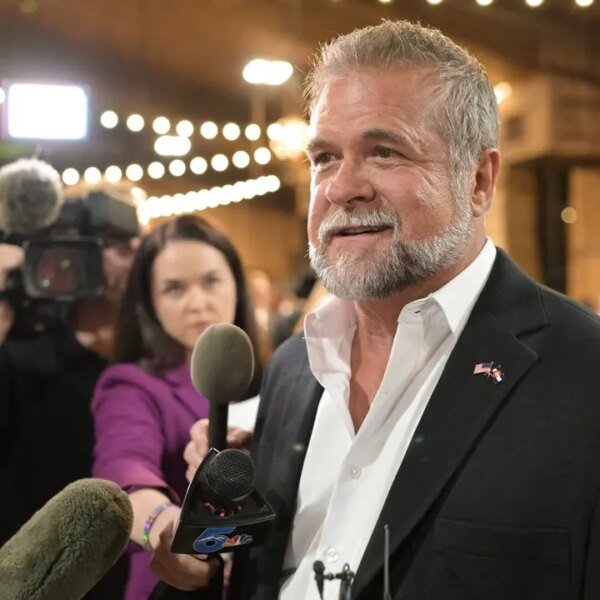

When North Carolina-based writer Pat Brothwell received a message request on LinkedIn from a New York matchmaker, he initially thought it might be a scam.
Instead, Brothwell said the sender, Marin Haugo, invited him to discuss potential matches through Maar Dating Club NYC. During their meeting, the matchmaker appeared to have done little research into his background.
“It felt like when a headhunter contacts you, and they just did a very cursory search,” Brothwell told Fortune. “She didn’t actually look into it because all her clients are based in New York. I live in Asheville, North Carolina.”
Brothwell said the matchmaker reassured him that distance wouldn’t be an issue, and suggested he fly to New York for dates if necessary, a comment that made him suspect her clients were in “different tax brackets” than most.
“There was a weird angle of, ‘I have wealthy clients, and I’m gonna try to find someone who’s just excited to date somebody wealthy,’” Brothwell said. “Everything just felt like it was maybe a little bit more than met the eye.”
Brothwell never met any of the matchmaker’s clients after the meeting, which he said took place three years ago. He said Haugo stopped responding when he told her he was a nonfiction author and was participating for research purposes. Brothwell assumed it was because Haugo feared being written about on his blog. Haugo did not respond to Fortune’s request for comment.
LinkedIn’s romance problem
The encounter illustrates an uncomfortable tension on LinkedIn: Some users and matchmakers treat the professional network as a source for romantic prospects, even though the company explicitly prohibits members from using it to pursue them.
“LinkedIn is a professional networking platform, not a dating site,” LinkedIn’s professional community policies state. “Do not use LinkedIn to pursue romantic connections, ask for romantic dates, or provide sexual commentary on someone’s appearance or perceived attractiveness.”
But a June Zety survey of more than 1,000 U.S. employees found that one in four believe it’s “fair game” for romantic advances. The survey also found that 22% had reached out or responded to someone on LinkedIn with romantic intent, while 12% had formed a romantic relationship that originated on LinkedIn.
LinkedIn says it removes unwanted advances on the platform and sexually explicit material.
In the second half of 2025, LinkedIn removed 477,911 comments that provoked harassment or abuse and 80,806 comments that used adult language or imagery using its harmful message detector, according to LinkedIn’s transparency report. The advanced safety detector, which screens incoming messages for policy violations, must be manually enabled by users.
“Our focus is on making sure that people are safe from unwanted romantic advances, which do go against our professional community policies,” a LinkedIn spokesperson told Fortune.
If a user violates one of LinkedIn’s policies, the platform sends a warning, and repeated violations often result in restricted access to LinkedIn features. In the most serious violations, a user may be permanently banned from the platform.
Why LinkedIn has become a dating-vetting tool
Searching a person’s public profile before a date is different from using LinkedIn’s messaging tools to make an unsolicited romantic advance—and more closely resembles the kind of online due diligence that has become routine in app-based dating.
“With over 100 million verified members, it’s not a surprise that people come to LinkedIn,” the LinkedIn spokesperson said. “But LinkedIn is a platform for professional growth and career advancement, not finding a date.”
Nevertheless, online daters use LinkedIn as a vetting tool, with almost half of Zety’s survey respondents believing that information posted to the platform is more reliable than jobs and college attendance shown on dating apps such as Hinge.
While LinkedIn matchmakers are strictly prohibited under the platform’s guidelines, professional matchmakers recommend researching potential partners online, including scanning their LinkedIn profiles.
“Relationship-minded singles are increasingly frustrated and fatigued by fake profiles, misleading information, safety concerns, and the lack of context on dating apps,” the director of coaching at The Matchmaking Company, Heather Drury, told Fortune. “As a result, singles have become their own private investigators. Some are turning to LinkedIn as an additional tool in their vetting process.”
The Matchmaking Company is a family-owned and operated matchmaking firm with brick-and-mortar locations in 24 states. The company has previously used LinkedIn to scout potential matches for its clients.
“Professional photos, career history, education, connections, interests, and community involvement can offer additional context that may not be available on a traditional dating profile,” Drury said. “For someone considering whether to meet a potential romantic partner, that additional information [on LinkedIn] can help them feel more informed and comfortable.”
Instead of prioritizing appearance, which is something only 18% of Gen Z daters rank first in importance, most Gen Z singles look for emotional maturity and kindness in potential partners instead, according to a survey conducted by the luxury dating site Seeking.
The survey also found that Gen Z prioritizes specific qualities such as shared values, ambition, and generosity.
“I find myself gravitating towards the same familiar social circles, and in that sense, university or professional career become big cues for me in determining that alignment,” a New York University freshman, who asked to remain anonymous, told Fortune.
A separate February survey from Resume Templates revealed that 92% of single LinkedIn users have used the platform to research online app matches before their first date, specifically paying attention to current job status, mutual connections, academic background, and endorsements. Additionally, 88% of LinkedIn users have used the platform to check up on an ex-partner or former romantic interest.
“Using LinkedIn has become a natural part of online dating,” the student said. “In online dating, where the amount of disclosed information is so limited and social media presence is often highly filtered or non-existent for guys, LinkedIn becomes a surprisingly telling and rich source of information.”
For some daters, that extra context isn’t simply curiosity. It can also feel like a safety check in an online-dating environment where users may worry about scams, harassment, or whether a match is accurately representing themselves.
Two-thirds of dating app users have reported instances of cyberstalking facilitated by dating apps, and 48% reported experiences of online interpersonal violence, including receiving unsolicited sexual pictures or messages, name-calling, and even threats of physical violence, according to a study published in the Asian Journal of Criminology last year.
In addition, information displayed on dating app profiles makes it easy for cyberstalkers to find users’ other online profiles, such as LinkedIn, or to find them through simple Google searches, stripping away the relative anonymity and safety barriers on dating apps.