The Indian rupee and the Philippine peso have fallen to record lows. Japan and South Korea have spent billions propping up their currencies in an attempt to avoid the same fate. The Indonesian rupiah is now weaker than it was at the depths of the Asian financial crisis.
For Asian countries that rely heavily on imported energy, the war in the Middle East has already sent oil prices soaring. Now, they face a knock-on effect that has grown into a crisis of its own: tumbling currency values, battered by rising fuel costs and skittish investors fleeing to the safety of the U.S. dollar.
To stem the slide, central banks across Asia have repeatedly intervened in currency markets, drawing down foreign exchange reserves they amassed over the years for precisely this kind of moment.
Those interventions, which involve selling dollars and buying local currencies, have averted an outright free fall. But with no end to the war in sight, concerns are rising about the long-term costs of riding out the crisis, including how long central banks can keep depleting their reserves if import prices continue to climb.
“At what pace of reserve drawdown does the ‘We have large reserves’ argument begin to lose its reassuring quality?” asked Sana Ur Rehman, a financial market analyst at EBC Financial Group.
Ordinary people across Asia are beginning to feel the effects of weakening currencies, especially in the nations hit the hardest by the energy shock, including India, Indonesia and the Philippines. When currencies sag, imports — from fuel to food — become more expensive. Those rising prices tend to hit poorer families the hardest, since they spend a larger portion of their income on essentials.
The throttling of traffic through the Strait of Hormuz, a critical shipping lane for oil and gas moving out of the Persian Gulf, has driven oil prices up nearly 50 percent since the war started. Brent crude, the global benchmark for oil, is trading around $105 a barrel.
Asia remains highly sensitive to swings in the foreign exchange markets, still scarred by the 1997 currency crisis, when currencies across the region collapsed under the weight of a surging dollar.
Recent moves in the U.S. bond market have compounded the strain. Yields on 30-year U.S. Treasuries rose to a two-decade high above 5 percent, lifting the dollar and accelerating the flow of money away from emerging markets. That has left some Asian central banks in a bind: Raise interest rates to defend their currency and shore up demand for local bonds, at the cost of economic growth, or try to shield economies already under pressure in other ways.
Indonesia’s central bank responded to this dilemma on Wednesday by delivering its first interest rate increase in more than two years, surprising analysts who had not expected the half-point increase. Bank Indonesia’s governor, Perry Warjiyo, said the move was aimed at stabilizing the rupiah and fighting inflation.
The rupiah has continued to hit new lows, nearing 18,000 to the dollar, despite repeated interventions by the central bank to put a floor under the currency. At a parliamentary hearing this week, Mr. Warjiyo said the central bank had a “more than adequate” stockpile of foreign exchange reserves despite having “increased the dosage” of currency interventions.
“This is not business as usual,” he said. “We are going all out.”
Asia’s biggest economies are also feeling the squeeze. Consider Japan.
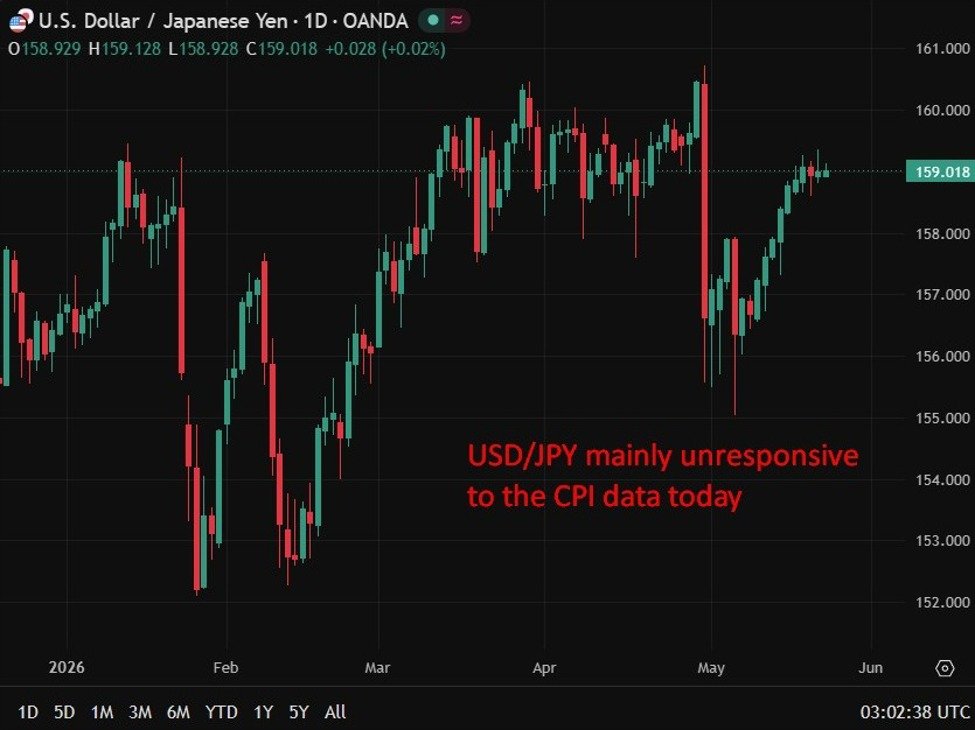
Tokyo stepped in at least twice last month to bolster the falling yen against the dollar, spending what analysts estimate was $63 billion to prop up the currency. Atsushi Mimura, Japan’s top government official overseeing currency policy, has signaled that more interventions could follow, with officials appearing to draw a line at around 160 yen to the dollar, close to 38-year lows.
But the boost proved fleeting. Two weeks after a brief rally, the yen retreated again, surrendering about half its gains.
“Intervention often serves to buy time,” analysts at Goldman Sachs wrote in a research note, noting that Japan had successfully fortified the yen in 2024 with an intervention. This time around, “we are skeptical the same will occur as soon,” they wrote, predicting more depreciation for the yen.
In India, the government took steps to ease pressure on the rupee, which has lost more than 6 percent against the dollar this year. Prime Minister Narendra Modi called on Indians to perform an act of “patriotism” by spending less on gasoline, diesel and imported goods, which would stem the flow of rupees exchanged into dollars.
Mr. Modi has also implored Indians to adopt austerity measures to curb demand for imported fuel, including canceling nonessential overseas travel, working from home and cutting back on cooking gas use. The Indian government has also more than doubled import tariffs on gold and silver to deter people from buying the precious metals abroad.
“In the current situation, we must place great emphasis on saving foreign exchange,” Mr. Modi said at a political rally this month.
The rupee’s weakness has been compounded by foreign investors pulling money out of India and shifting it into the U.S. dollar or markets abroad that are rising because of enthusiasm for artificial intelligence companies. As a result, the money flowing into the country is slowing just as rising energy prices push up import costs.
Somnath Mukherjee, chief investment officer at ASK Wealth Advisors in Mumbai, said the popular trade for foreigners is: “Sell India, buy U.S. and Taiwan.”
Indonesia and the Philippines are facing a similar pinch, with foreign investors unwinding their positions in the region as import bills have gotten more expensive.
ANZ, the Australian bank group, said it “will become increasingly difficult to sustain” the level of intervention carried out by India, Indonesia and the Philippines.
Indonesia’s and the Philippines’ foreign exchange reserves have each dropped about $8 billion since the beginning of the war in Iran, a 5 percent decline for Indonesia and a 7 percent drop for the Philippines. India’s foreign exchange reserves tumbled by nearly 4 percent, or about $27 billion, as of early May.
Short-term relief for currencies in the region rests on a single development, economists said.
“We need to see the real end of the war in Iran to see these currencies starting to move up,” said Alicia Garcia Herrero, the chief economist for Asia Pacific at Natixis, a French financial firm.
But the energy shock is likely to leave deeper scars, said Mr. Rehman, the financial markets analyst. After the 1997 financial crisis, Asia built up larger reserves, adopted flexible exchange rates and strengthened its institutions to better withstand future shocks. The war in the Middle East, he said, has exposed a different kind of vulnerability.
The question now is whether Asia can reduce its dependence on energy from the Middle East and the U.S. dollar, Mr. Rehman said.
“This crisis did not create that question,” he said. “It simply made ignoring it impossible.”