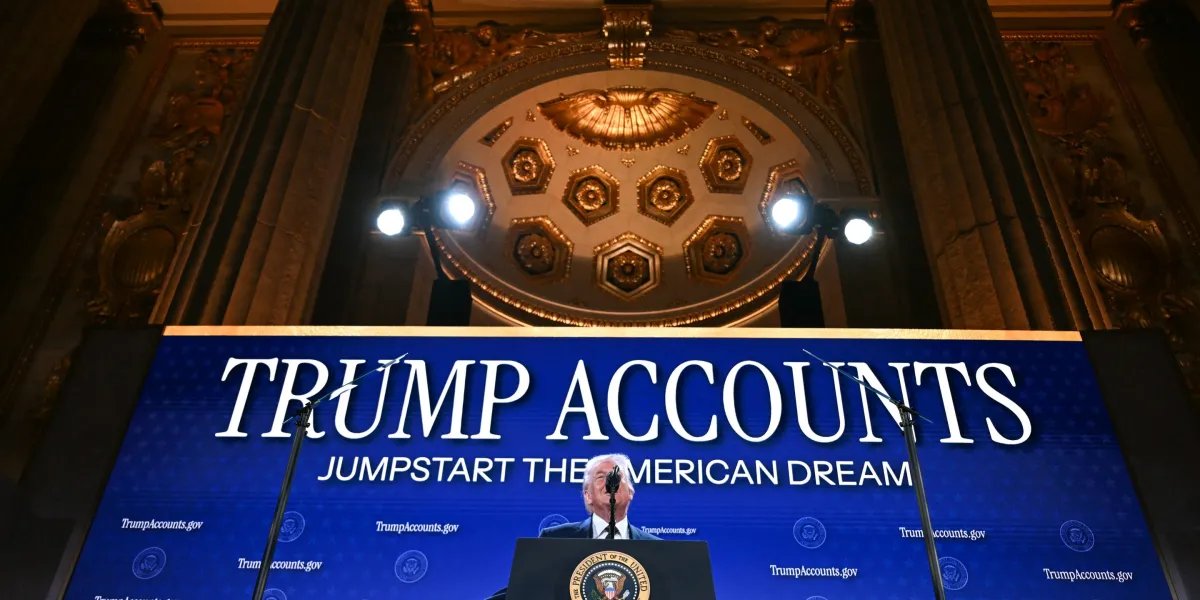
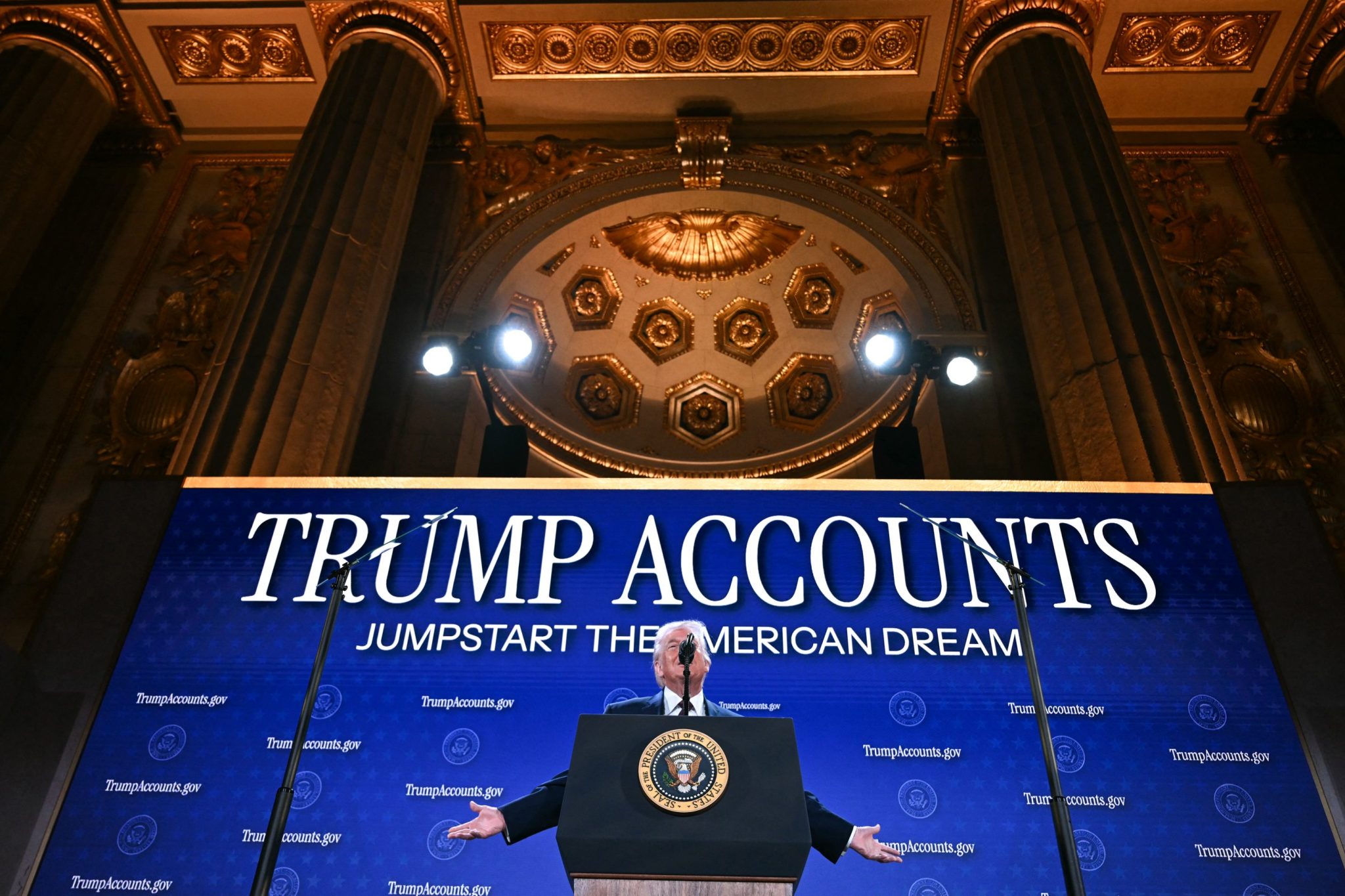
Earlier this month, The New York Times reported that White House and Treasury officials have discussed allowing billionaires to donate shares of stock directly into Trump Accounts, the new $1,000 investment accounts created for (most) American children.
The idea alarmed many readers. One child’s account might receive stock in the next Nvidia while another receives stock in a future Enron.
Within hours, the proposal’s lead advocate, Brad Gerstner, called the report “misleading,” clarifying that all funds would remain in a diversified index fund — the only option the law currently allows to protect children from the volatility of individual stock picking. If that is correct, the immediate investment risk to children is smaller than it first appeared.
The program also lacks the administrative infrastructure to handle it stock donations. Trump Accounts already authorize employer matches and philanthropic contributions, but delivering those contributions to tens of millions of children requires a streamlined policy platform that has not been built. Adding the complexity of stock-to-cash conversion before that foundation exists is premature.
That debate, however, is a sideshow. The most urgent problem with Trump Accounts is simpler and more serious: the vast majority of eligible American children do not have one, and the federal government has no plan to enroll them.
Roughly 6.6 million children are enrolled in Trump Accounts. About 73 million children are eligible. The reason for the gap is straightforward: The current design requires parents to file a tax form or navigate a government website to activate an account. We have seen this before. When Maine required parents to opt into a similar children’s savings program in 2008, only 40% signed up despite a multimillion-dollar recruitment effort. The families left behind were disproportionately low income. When Maine switched to automatic enrollment on an opt-out basis in 2014, participation went to 100%.
The Center for Social Development at Washington University in St. Louis has spent 18 years studying this problem. In the SEED for Oklahoma Kids experiment, the only long-term randomized trial of children’s investment accounts in the United States, the state automatically opened accounts for newborns with a $1,000 deposit into a diversified state savings plan. Participation was 99.9%. Only one family out of more than 1,300 opted out for religious reasons. After 17 years, the initial $1,000 deposit has grown to approximately $2,600 through investment returns alone, and participants hold an average of roughly $5,000 in total 529 college assets. As these children turn 18, they are already using the funds: 150 participants have requested distributions for post-secondary education expenses.
The law creating Trump Accounts already authorizes Treasury to implement enrollment using Social Security numbers. The authority for automatic enrollment exists. What is missing is the willingness to use it.
If wealthy donors want to contribute—in cash or appreciated stock—a better approach would be to channel those contributions through a pooled fund that converts them into diversified investments across all children’s accounts. Donors would still receive their tax benefits. Children would be protected. And all enrolled children would benefit, not just those whose accounts happen to be selected by a wealthy donor.
The stock donation debate may continue. The enrollment gap will not correct itself. Those 67 million children do not need a clever tax strategy. They need an account.
The opinions expressed in Fortune.com commentary pieces are solely the views of their authors and do not necessarily reflect the opinions and beliefs of Fortune.