The head of the World Health Organization said on Tuesday that he was “deeply concerned about the scale and speed” of an Ebola outbreak in the Democratic Republic of Congo and Uganda, as the suspected death toll climbed to more than 130 people.
Laboratory testing has linked 30 cases to the viral outbreak in Congo’s northeastern Ituri province, where the first cases were identified, Tedros Adhanom Ghebreyesus, the director-general of the W.H.O., said at a meeting of the organization in Geneva.
Many migrant laborers are drawn to gold mines in Ituri, which is also home to a large population of people displaced by conflict. Over 100,000 people have been uprooted in recent months alone, Dr. Tedros said, warning that “significant population movement” risked spreading the virus.
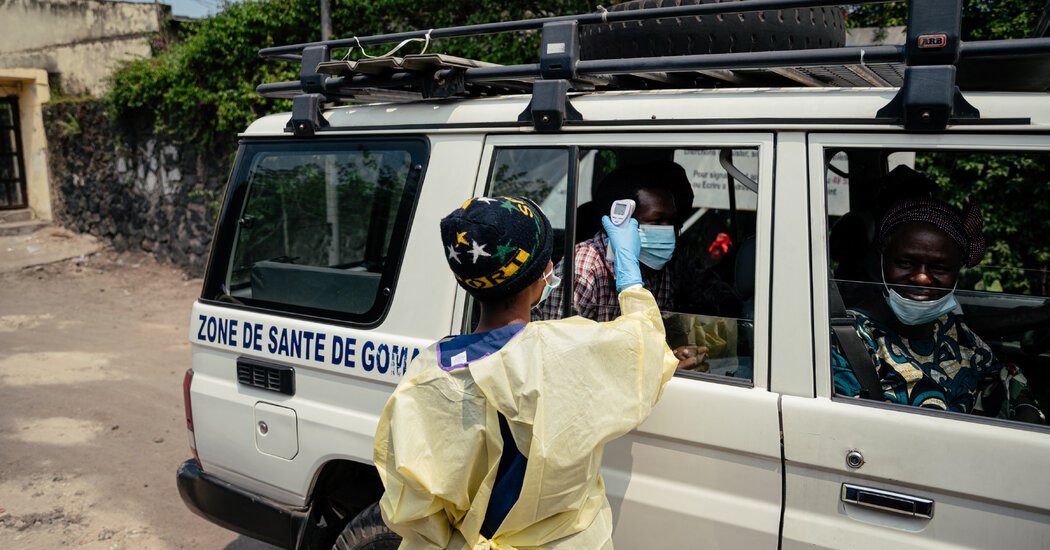
Dr. Tedros said the deaths of health care workers and the absence of vaccines or therapeutics to treat the Bundibugyo species of Ebola behind the outbreak raised fears that the outbreak would spread further and cause more deaths. Cases have already been reported in urban areas, including in Kampala, the capital of Uganda, and Goma in eastern Congo.
The W.H.O. chief made his comments shortly after Congo’s health minister, Dr. Samuel-Roger Kamba, said at a news conference that 131 suspected deaths and 513 suspected cases had been linked to the outbreak.
The figures were a sharp increase from Monday, when the Centers for Disease Control and Prevention said there had been reports of 88 suspected deaths and 336 cases, and 11 confirmed cases in Congo. Two cases had also been confirmed in neighboring Uganda, the C.D.C. said.
A C.D.C. order issued on Monday allows the United States to bar foreigners from entering the country if they have been in Congo, Uganda or South Sudan in the previous 21 days. The order will remain in place for 30 days.
Several countries in the region, including neighboring Rwanda, have also started screening travelers or tightening border controls.
The Africa Centers for Disease Control and Prevention said in a statement on Tuesday that it had acted “rapidly, transparency and responsibly” to call the world’s attention to the outbreak, and criticized the “use of broad travel restrictions as a primary public health tool.”
“Global health security cannot succeed if countries are penalized for transparency during outbreaks,” Dr. Jean Kaseya, the head of the organization, said on social media.
President Félix Tshisekedi of Congo urged citizens to remain calm and to follow containment measures to curb the spread of the disease.
Brian Otieno contributed reporting from Nairobi, Kenya.