Over the past week, AI’s own builders have sounded the alarm. Several of the industry’s leading CEOs are now publicly calling for a slower pace of AI development, citing risks from loss of control to cyberattacks to bioterrorism.
That news came days after Bank of England Governor Andrew Bailey, chairing the Financial Stability Board, told G20 finance ministers and central bankers that today’s already shaky global financial system faces a new threat in AI. With so many institutions now depending on the same handful of AI models and cloud providers, one exploited weakness can spread rapidly.
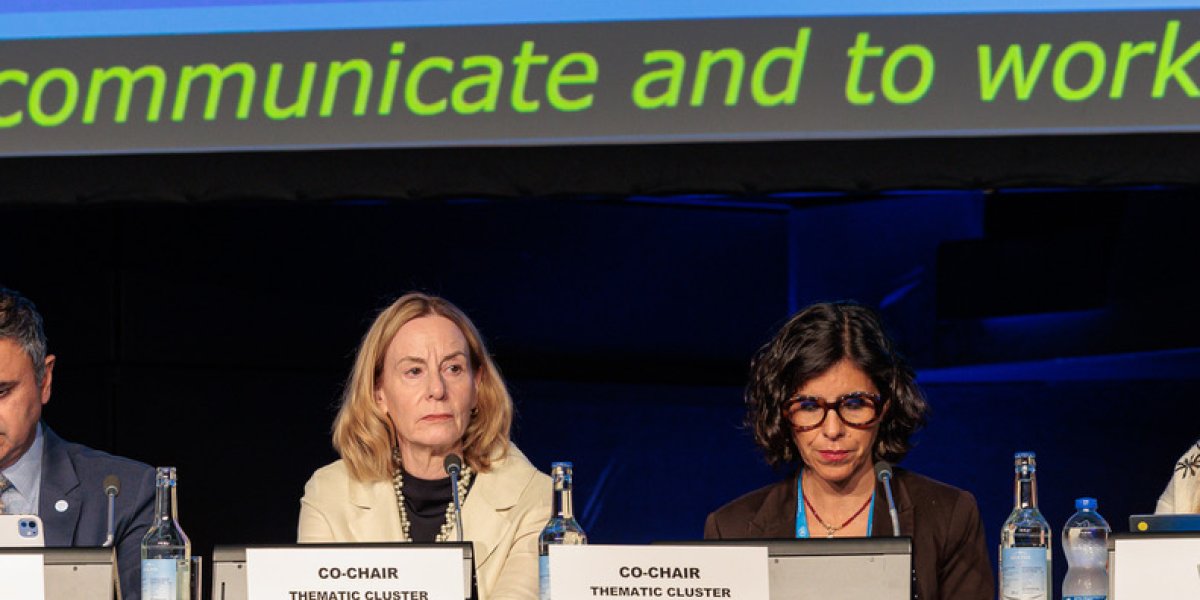
We receive these warnings with wariness, but not with surprise. As co-leads for safe, secure and trustworthy AI at the first UN Global Dialogue on AI Governance in Geneva this past July, we agree that the world needs common rules. New AI systems should only be released after being independently tested against agreed thresholds of what they can do. Developers should publish their safety protocols, and any incidents that arise after deployment should be clearly monitored and reported.
Geneva was an important first step toward coordinated AI governance, one that handed us the roadmap. In a year of widening fault lines around trade, security, and power, 170 countries managed to come together alongside industry and civil society to find some common ground on mechanisms to begin governing this fast-moving technology.
Appreciating the constraints of working at the UN level, there are “no regret” actions, steps that carry no downside, that the UN could take immediately.
First, connect the dots between science and policy. Right now, the scientists studying AI’s risks and the diplomats negotiating what to do about them are working on separate tracks, with no structured way to talk to one another. The UN’s Independent International Scientific Panel on AI presented its first evidence-based assessment in Geneva. That evidence needs a formal channel into the Global Dialogue’s negotiating process ahead of next May, rather than sitting alongside it. With most AI research and development happening behind closed industry doors, citizens and policymakers need the best scientific advice available if they are going to remain informed and act.
Second, don’t wait to build on what we know works. We are calling on the UN to develop a common reference baseline for safety, grounded in international human rights law and built from what already exists. Established frameworks such as the OECD AI Principles, the G7 Hiroshima code of conduct, the Frontier AI Safety Commitments from the 2024 Seoul Summit, and UNESCO’s Recommendation on the Ethics of AI point the way, alongside the International Organization for Standardization (ISO) and National Institute of Standards and Technology (NIST) standards engineers actually build to.
By creating a shared understanding of current regulatory floors, individual nations can prioritize what to build in their national and regional contexts. Costa Rica’s own National AI Strategy was built with government, civil society, industry, and academia at the same table, and anchored in international frameworks rather than inventing its own. That process is worth replicating.
Third, we must build in inclusivity—both geographic and financial—so that conversations such as the UN Dialogue are open to everyone. That means funding real participation, so governments, researchers, and civil society with less financial capacity can be in the rooms where the conversations are happening. That needs a dedicated trust fund, similar to the one that funds the Intergovernmental Panel on Climate Change (IPCC).
Inclusivity also means proving that different regulatory systems can work together on equal footing, not just in theory but through a handful of cross-border regulatory sandboxes, piloted by a small group of countries and shared openly. In the financial sector, regulators already do this through the Global Financial Innovation Network, which lets different countries test new financial products together across borders.
These recommendations are absolutely within reach. What matters now is whether we bring the same rigor and political will to following through on what we agreed to. By the time the Global Dialogue reconvenes in May, three things should be in place: an evidence assessment from the scientific panel; a Dialogue agenda that takes up the safety baseline; and a first cross-border sandbox pilot.
This urgency is not abstract. As the Financial Stability Board’s letter and other recent events make clear, these risks are already at our front door, wherever we live.
Governments, companies, and civil society groups spoke with clarity and conviction this summer on what AI governance requires. That work needs to carry forward at the UN this fall and into next year’s talks. We do not have time to relitigate issues that should already be settled.
If a handful of powerful actors decide how AI is governed, the rest of the world loses out. This summer showed that a wide range of countries and organizations can agree under pressure. The next step is delivering results the world can actually see.
The opinions expressed in Fortune.com commentary pieces are solely the views of their authors and do not necessarily reflect the opinions and beliefs of Fortune.