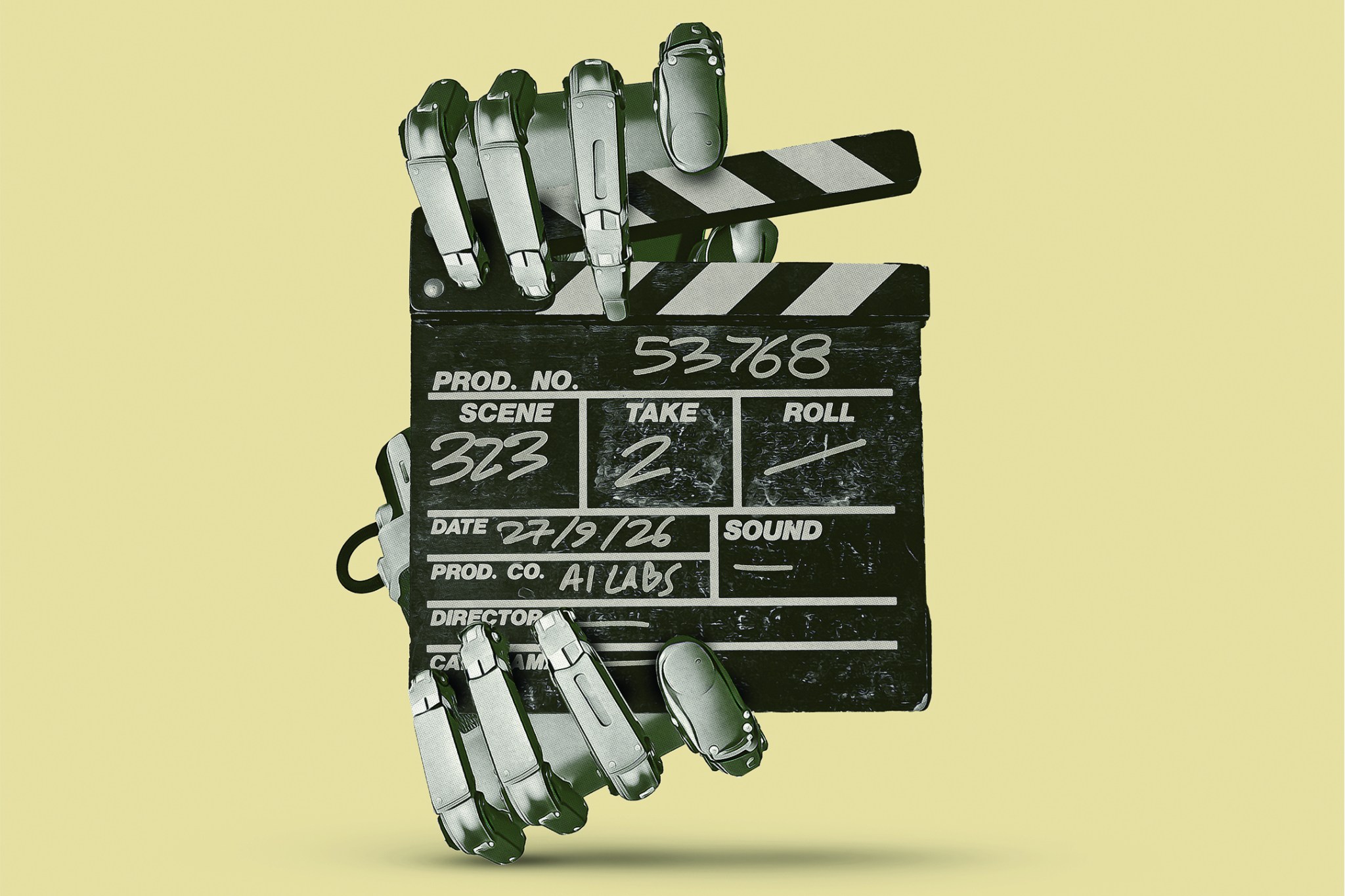
Singapore celebrated its 61st birthday with two films. One, Bersama Majulah, depicts the Southeast Asian country under siege by zombies; the other, Trace Project, tells an inspiring tale of a young man who grows up to become Singapore’s first astronaut on Mars.
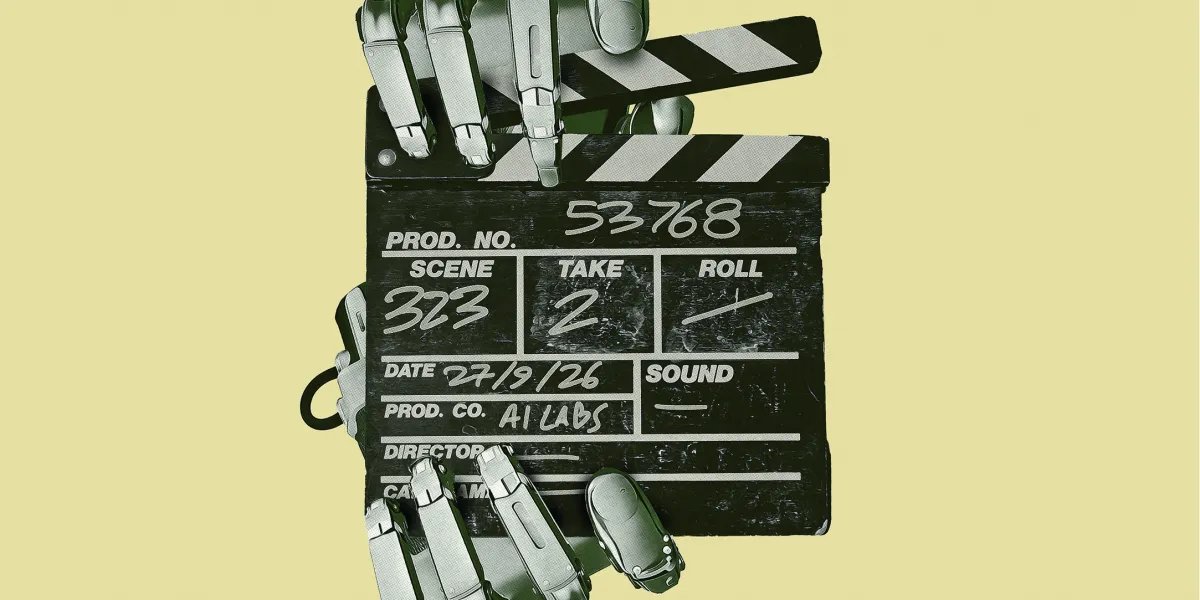
The twist? Neither film starred a human actor. Everything in both films—apart from their scripts—had been fully generated by AI.
Generative AI in filmmaking is the first real proof of how the new technology can disrupt an established industry. It started with short-form content: According to Chinese state media, over 95% of the more than 120,000 Chinese microdramas released in the first quarter of 2026 were AI-generated, compared with nearly zero just a year ago.
The technology is now encroaching on more established media: Last September, Hong Kong broadcaster TVB released a 10-episode short drama titled You, and Only You, the first of its kind in Hong Kong to feature AI-generated characters. (The network is now using its virtual actors in ad campaigns.)
“AI is like oxygen—it’s everywhere,” says Danming Xie, senior vice president and chief AI scientist of Chinese video-streaming platform iQiyi. “It’s increasingly impossible not to use AI in video production. The conversation’s shifting more toward how deeply creators use it.”
Users are flocking to Chinese video-generating models like those from Kling AI, launched by the streaming company Kuaishou in 2024. The platform claims to have 100 million users, and says 70% of its revenue comes from overseas markets.
Other major players in this space include TikTok owner ByteDance and its Seedance 2.0 model; e-commerce giant Alibaba and its open-source model HappyHorse; and U.S.-based startup Higgsfield AI.
Proponents of AI-generated films argue that the technology allows anyone to tell stories. Yet others worry about a loss of the industry’s human core.
Film studios in Hengdian, a town nicknamed “China’s Hollywood,” now stand empty as the industry turns to AI to generate short—and increasingly not-so-short—dramas.
“There’s been a lot of redundancies in China,” says Chris Shaw, who leads the Puttnam School of Film and Animation at Singapore’s Lasalle College of the Arts. “A lot of actors and studios have suddenly disappeared.”
And then there’s the biggest test: Will audiences embrace a feature film that was made by AI, even with human direction?
The directors behind Singapore’s newest AI-generated films, unsurprisingly, see video-generating AI models as a net good for the industry.
Pax Chen, whose FizzDragon studio is responsible for the outer-space-themed Trace Project, thinks AI is helping circumvent Hollywood’s diversity problem. “People like to watch films because they see themselves in them. Asian people, however, may not often see themselves in Hollywood films,” says Chen, an electrical engineer by training.
95%
SHARE OF THE 128,000 CHINESE MICRODRAMAS RELEASED IN Q1 2026 THAT WERE AI-MADE
70%
SHARE OF OVERSEAS REVENUE FOR KLING AI, A VIDEO-GENERATING STARTUP
<$3,000
COST OF FILMING A SHORT GEN AI DRAMA IN CHINASOURCES: CHINA NETCASTING SERVICES ASSOCIATION, KLING AI, CAIXIN
Joel Boh, founder of film studio Edenstone and producer of the four-minute-long zombie video, agrees that AI is allowing stories to be told that, otherwise, might never have been filmed. “Nowhere in the last 100 years were filmmaking tools so accessible,” Boh says. “I’d prefer to work with imperfect but evolving technology to tell a good story than to not do it at all.”
Boh’s short film cost him 8,000 Singapore dollars ($6,315) to produce. Costs in China are even lower: Some large companies in Hangzhou are using AI to generate 100-minute dramas for under 20,000 yuan ($2,981), according to Chinese media outlet Caixin Global.
“After AI emerged, film production became way more accessible,” notes Xie. And iQiyi is a symbol of how quickly AI is taking over the industry. The Beijing-based company was founded in 2010 as a streaming platform similar to Netflix, letting Chinese users watch human-authored movies and TV shows from across the region. Yet in April, iQiyi announced that it was pivoting to AI, turning its video app into a social media platform hosting AI-generated content. The founder of iQiyi, Gong Yu, called AI a “once-in-a-decade opportunity.”
Another reason why video AI is taking off in Asia is the region’s comparably looser copyright regulations.
“China doesn’t have the legislation involved to stop people from making films using AI,” says Ian Dixon, an associate professor at the Wee Kim Wee School of Communication and Information at Singapore’s Nanyang Technological University (NTU). “They’re also certainly not going to have people out protesting on the streets, like the American screenwriters and actors do.”
The West, by contrast, has more frameworks in place to protect artists. In 2023, the Screen Actors Guild–American Federation of Television and Radio Artists (SAG-AFTRA) went on strike, protesting changes in the industry caused by disruptive technologies like AI and streaming services.
“The West is more militantly reactive,” Shaw notes. “There’s a lot more vocalization of protecting the rights of artists, and more paranoia that such rights will go away.”
And as Chinese video models like ByteDance’s Seedance go global, they’re hitting barriers as they enter markets that care more about copyright law.
When Seedance 2.0 was launched in February, realistic clips of actors Tom Cruise and Brad Pitt brawling on a rooftop flooded the internet, sparking allegations of copyright infringement. The Chinese tech firm has since agreed to strengthen copyright safeguards on its video- and image-generation models as part of an AI copyright truce with the Motion Picture Association (MPA), a trade organization representing major U.S. film studios.
AI-generated films are polarizing. Boh’s short film premiered to mixed reviews online, even as it drew a record number of visitors to Edenstone’s website. “We saw close to 70,000 active users in three days, and our servers couldn’t handle it,” Boh notes. “It crashed and went offline three times. That was a happy data point, I suppose.”
He admits that audiences might still need time to get used to AI-made films. “It’s like how we used to only write [with] pen and paper, but the world has moved on to using Microsoft Word and Google Docs, because we now require a certain level of speed,” he says.
“It’s difficult to persuade traditional filmmakers and moviegoers,” Chen concedes. “Their mindset and way of working are already decades in the making.” She’s now pivoting to creating AI-generated interactive films, which allow viewers to participate in the storytelling process by making choices that influence the plot.
And while users seem to tolerate AI in short-form content—perhaps the video equivalent of junk food—they’re still skeptical of feature-length AI films.
“You still need to have very strong fundamentals to make a good movie,” says Shaw, adding that a well-made AI film can only be born from prompts based on a strong understanding of filmmaking principles and literacy. “Even if everyone has access to the tools in the kitchen, not everyone’s a world-class chef.”
Still, it’s not like Hollywood is particularly creative either. Just one entirely original film—Warner Bros. and Apple’s F1: The Movie—features in the top 10 highest-grossing films of 2025; the other nine are sequels, or based on existing properties like Minecraft or the anime Demon Slayer.
“Studios are able to replace human-made content with AI, because cinema is already like an AI product,” Dixon says. “If you’re wondering what Hollywood’s going to do with AI, they’re going to make superhero films.”
One Chinese release shows that audiences still appreciate a human-authored film, even a terribly made one: In August, Chinese audiences were befuddled by Niu Lai, a crudely animated film about a cow, from a mother-and-son duo with no filmmaking experience.
But that confusion grew into huge crowds flocking to a movie that viewers found refreshing amid a sea of AI-generated content. Niu Lai eventually grossed 60 million yuan ($9.1 million) at the Chinese box office—and beat superhero film Spider-Man: Brand New Da