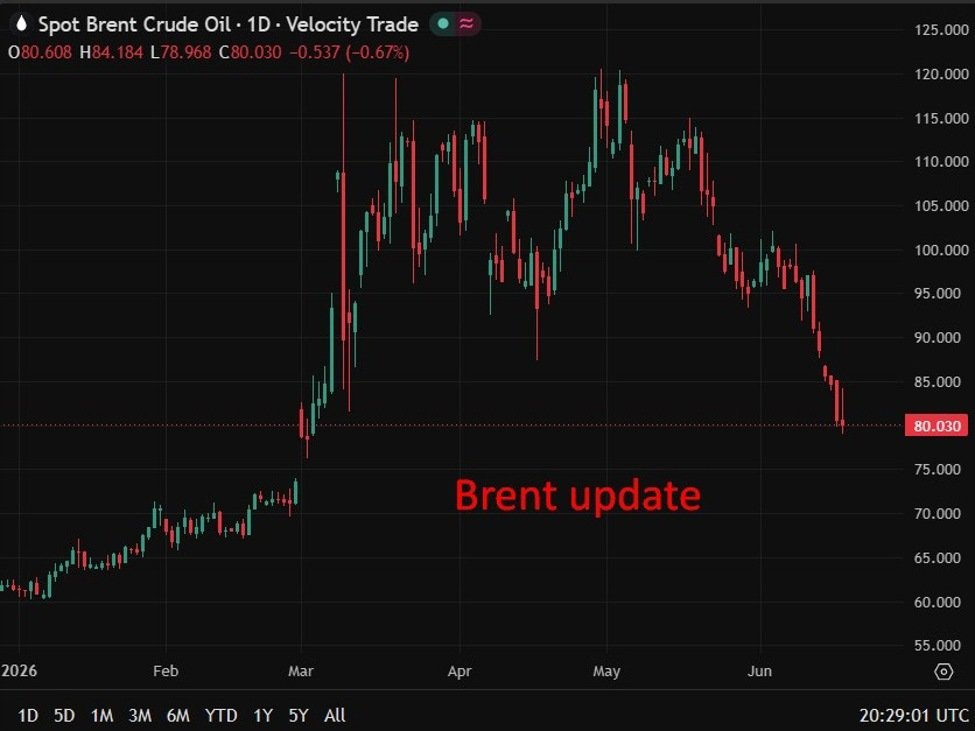
The confirmation that Hormuz will not revert to pre-war conditions introduces a structural premium into crude pricing that markets will need to reprice on a semi-permanent basis. A tolling regime on the world’s most critical oil chokepoint, even one framed within international law, adds a new and unpredictable cost layer for tanker operators and crude importers alike. The $300bn investment commitment signals the peace framework is substantive rather than cosmetic, which may provide modest near-term relief on supply disruption risk, but the Hormuz transit fee signal is the more market-sensitive development and will keep a floor under oil.
—
Iran’s chief negotiator says Hormuz will not return to pre-war conditions and Tehran will charge for strait transit services, as a $300bn investment deal is confirmed under the peace MOU.
Summary:
- Hormuz will not return to pre-war conditions, though Iran says this does not mean acting against international law or maritime navigation
- Iran intends to charge for transit services through the strait
- A $300bn investment allocation has been confirmed under the peace MOU, part of which is earmarked for reconstruction
Iran’s top negotiator has declared the Strait of Hormuz will never return to the conditions that prevailed before the conflict, while confirming Tehran intends to levy charges on vessels transiting the world’s most critical oil shipping lane.
Qalibaf, speaking via Iranian state media, framed the changes as a sovereign exercise rather than a violation of international norms, saying the new arrangements would not act against international law or impede maritime navigation. The distinction is unlikely to fully reassure energy markets, which have spent months pricing in the risk of prolonged disruption to the roughly 20% of global oil supply that moves through the strait.
The remarks came alongside confirmation that $300 billion has been allocated for investment in Iran under a memorandum of understanding, with a portion directed toward reconstruction.
The transit fee signal is the more immediate market concern. Any formalised tolling mechanism on Hormuz would represent a structural shift in the cost of moving Gulf crude to global markets, with implications for tanker operators, refiners and end consumers across Asia and Europe. How those charges are structured, enforced and priced into freight rates remains to be seen, but the direction of travel is now explicit.