
When Ella Traina, a sophomore at Indiana University, thinks about her future, she isn’t focused on becoming a CEO or making a fortune. She wants to figure out how to make the world a little better.
That might sound like a lofty ambition for a 19-year-old, but Traina is taking a decidedly practical approach: She’s studying philanthropy at Indiana University’s Lilly Family School of Philanthropy, the first school of its kind in the world.
She’s part of a growing cohort of students doing the same. Over the past decade, enrollment at the school has grown more than 300% from about 50 students to roughly 230, as students explore careers in nonprofits, foundations, corporations, and government. The school says it has had a 100% job placement rate for the past three years—a higher rate than the university’s business school students.
The growth comes as more young people look for careers that offer something beyond a paycheck and a chance to make a tangible difference. And in a world where wealth is increasingly concentrated among the richest Americans, philanthropy is becoming an important part of the conversation about how money and resources can be put to work for the public good.
Meanwhile, the $124 trillion Great Wealth Transfer—the passing down of baby boomer fortunes to younger generations—begs the question of how philanthropy will look in the future. Will millennials and Gen Z carry on the traditions of their family fortunes, or will they chart their own path?
These are the types of questions a philanthropy education can explore, as well as how the wealthy are filling the void left by the federal government, which has pulled back funding for nonprofits and higher education institutions.
Gen Z wants to make a difference and make a living—and philanthropy could offer both
Indiana University’s roots in philanthropy education go back decades. The university formally organized its fundraising teaching and research into an academic center in 1987. A quarter-century later, in 2012, it was established into an official philanthropy-focused school, making it the first place in the world dedicated exclusively to the study and teaching of the subject. Today, it is one of the few places where students can earn a bachelor’s, master’s, or Ph.D. specifically focused on philanthropy.
The school’s development has been supported by the Lilly Endowment—established in 1937 by the family of pharmaceutical executive Eli Lilly—since 1988. It views philanthropy and the nonprofit sector as important complements to government and business in promoting the public good.
“We hope that as these students prepare for careers in philanthropy, they are also discovering what it means for them to live lives of meaning and purpose and how they can help others do so as well,” an endowment spokesperson told Fortune.
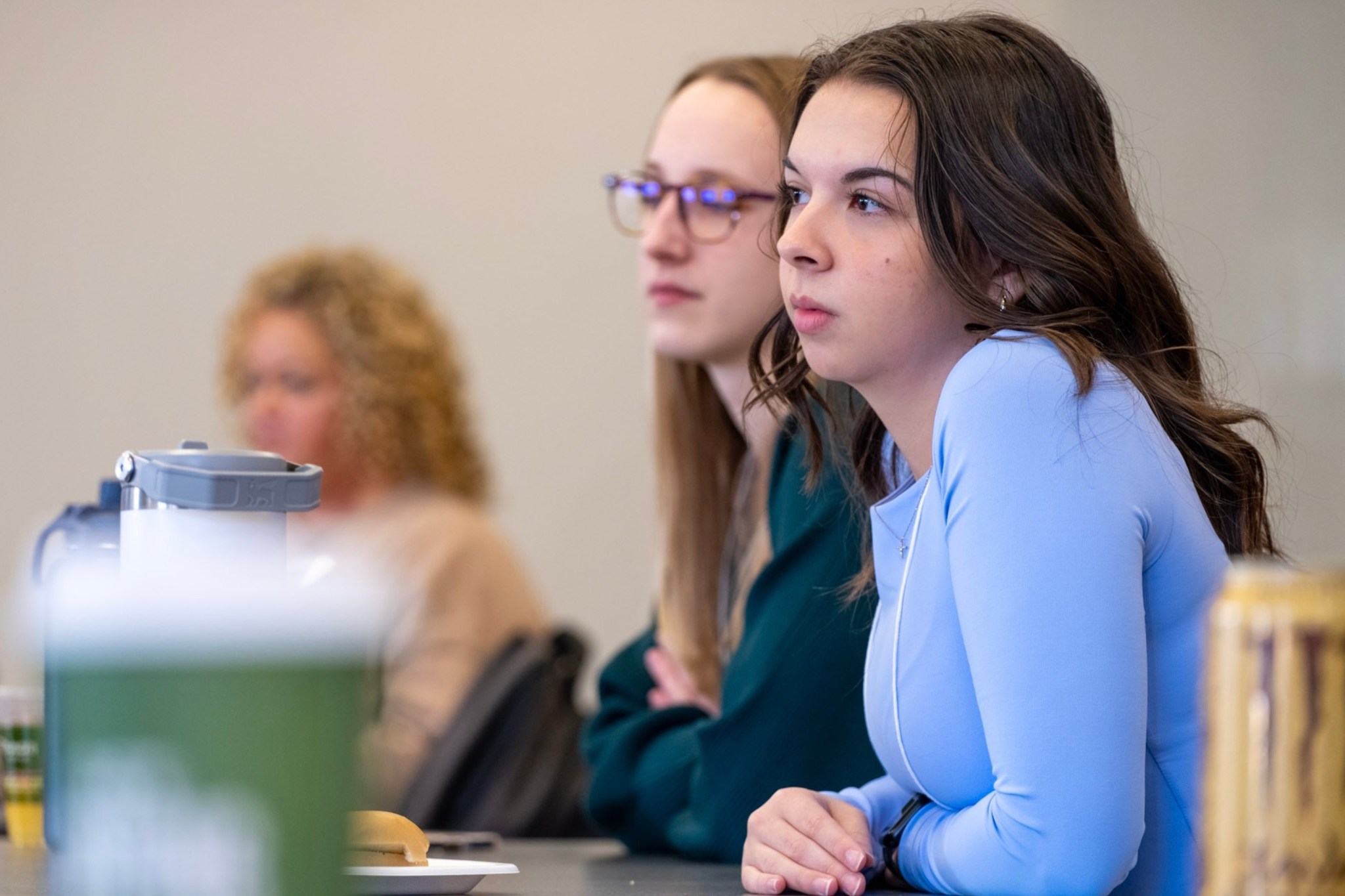
That philosophy carries into the classroom. Traina’s classes range from the history of philanthropy to storytelling for social change. In one course, she and six classmates decided how to distribute a real $10,000 grant.
“When I wake up every day and I want to help achieve impact… I want to keep moving that needle to where there are less people suffering and without basic human needs,” Traina said.
After graduation, she hopes to work in impact evaluation, helping nonprofits measure whether their programs are making a difference. Traina’s ambitions reflect a broader sentiment among Gen Z. A survey released this summer by the Walton Family Foundation, established by Walmart founders Sam Walton and his wife Helen, found that 79% of Gen Z hope to find a future job primarily focused on helping others or making a positive difference in people’s lives.
That desire is not only shaping what young people study but also where they work—and where they don’t. Forty-four percent of Gen Z said they had left a job they felt lacked purpose, while around 40% had rejected a potential employer for similar reasons, according to a 2025 Deloitte survey.
And there are plenty of opportunities to pursue that purpose. Nonprofits employed about 12.8 million workers in 2022, accounting for nearly 10% of all private-sector jobs, according to an analysis by the U.S. Bureau of Labor Statistics.
Still, Amir Pasic, dean of IU’s Lilly Family School of Philanthropy, said the sector faces a persistent misbelief: that meaningful work comes at the expense of a viable career.
“There’s still this misconception that if you go into philanthropy or the nonprofit sector that you are going to be offering to work for free, basically… ‘Aren’t you sweet to have such a warm heart?’” Pasic said.
The reality is more complicated. Nearly two-thirds of nonprofit workers earn more than $75,000 a year—about 15% more than the average U.S. salary—and philanthropy-related roles at some Fortune 500 companies can reach well into six-figures. Walmart, for instance, has advertised a grant manager role in Arkansas paying up to $180,000, while a Microsoft job has offered compensation of up to $275,000 for a recent community affairs role.
For Traina, the potential payoff of her studies goes beyond a paycheck: “If you regret the degree, the worst you’re gonna have is you’re gonna know how to help people and how to impact society and create change.”
Philanthropy as a career switch
Patrick Lindenmeyer took a less traditional route into the field. He spent nearly 17 years in financial services helping clients grow and structure their wealth. Many of them wanted to be generous with their money, he told Fortune.
Then the pandemic hit. It pushed him to rethink what he wanted from the second half of his career, and the part of his job he’d always enjoyed most was helping clients figure out how to direct their money toward causes they cared about.
“The financial services career really gave me the technical ability [of asking] how, like how do we best structure assets? How do we best leverage impact?” Lindenmeyer said. “But the school of philanthropy really helped me with the why behind why individuals want to make this impact, and what does that look like.”
He enrolled in the school’s online master’s program in philanthropic studies, taking one course per semester while working full time. Midway through the program, he landed what he called his dream job: gift planning officer at the University of Notre Dame, where he helps families build giving into their estate plans through tools like donor-advised funds and charitable remainder trusts. Several of his Notre Dame colleagues have also completed the IU degree or are working on it, he said.
Lindenmeyer is now also pursuing a master’s in nonprofit administration at Notre Dame, which he expects to finish in 2028. Plenty of universities teach the business side of running a nonprofit, he said, but IU’s program focuses on what drives donors to give. Overall, he encourages others at any point in their career to explore studying philanthropy.
“People that are looking for true, meaningful work, work that creates an impact and something that they can truly see, I think that this is something worth exploring,” he said. “That certainly wasn’t on my radar … 25 years ago when I entered college as an undergrad.”
Continued wealth growth could exponentially expand philanthropy’s reach
From a wealth and giving standpoint, philanthropy could be on the cusp of a major expansion.
In 2025, billionaire wealth surged more than 16%—three times faster than its average growth over the previous five years—and reached a record $18.3 trillion, according to Oxfam. Charitable giving also reached a record $617.2 billion in 2025, but rose just 3% after adjusting for inflation, according to Giving USA.
The gap between the wealth billionaires have grown and what they’re giving has fueled criticism that the ultrawealthy are giving too slowly. MacKenzie Scott remains a notable exception: She has given away more than $26 billion, and alone accounted for one-third of America’s megagifts last year.
Since then, the fortunes of many of the world’s wealthiest people have continued to grow, fueled in part by soaring tech stocks and optimism around AI. Take Jensen Huang, for example. The billionaire Nvidia CEO donated $75 million to Vanderbilt University.
For Pasic, that presents an opportunity for students at Indiana University to help shape how such wealth is put to work, particularly as younger heirs push their families to give away more money, sooner.
“The anticipated large windfalls that will come through the AI industry,” Pasic said. “There’s this problem of money on the sidelines, to which more is going to be added pretty soon.”
And while the $124 trillion Great Wealth Transfer has the power to change philanthropy as we know it, that handoff isn’t completely solidified. Wealthy Americans are growing less confident their heirs will carry on their family’s charitable giving, according to a 2026 Bank of America Private Bank study. But perhaps that’s where philanthropic education will play a larger role.
Lindenmeyer sees firsthand how aging baby boomers are deciding where their wealth goes next.
“We had always talked about the great wealth transfer,” he said. “First it was … the retirement boom for the baby boomers and what that was going to look like, and then now as they’re aging and passing away, what does this transfer of wealth look like?”