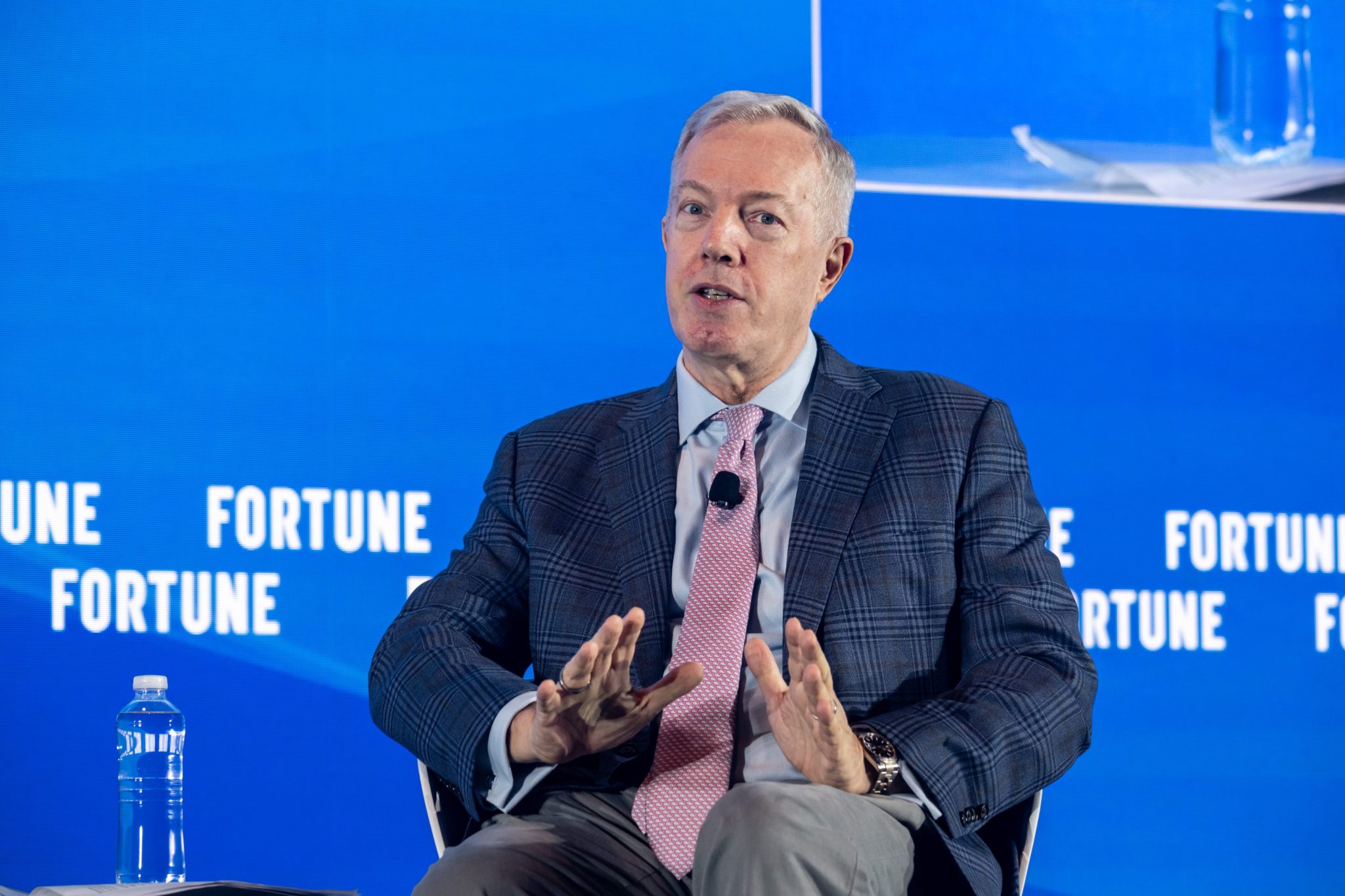
As U.S. voters headed to the polls on Tuesday, former U.S. ambassador to Vietnam Ted Osius predicted that a Democratic-controlled Congress could curb President Donald Trump’s ability to wage war in the Middle East, but would likely struggle to unwind his tariffs.
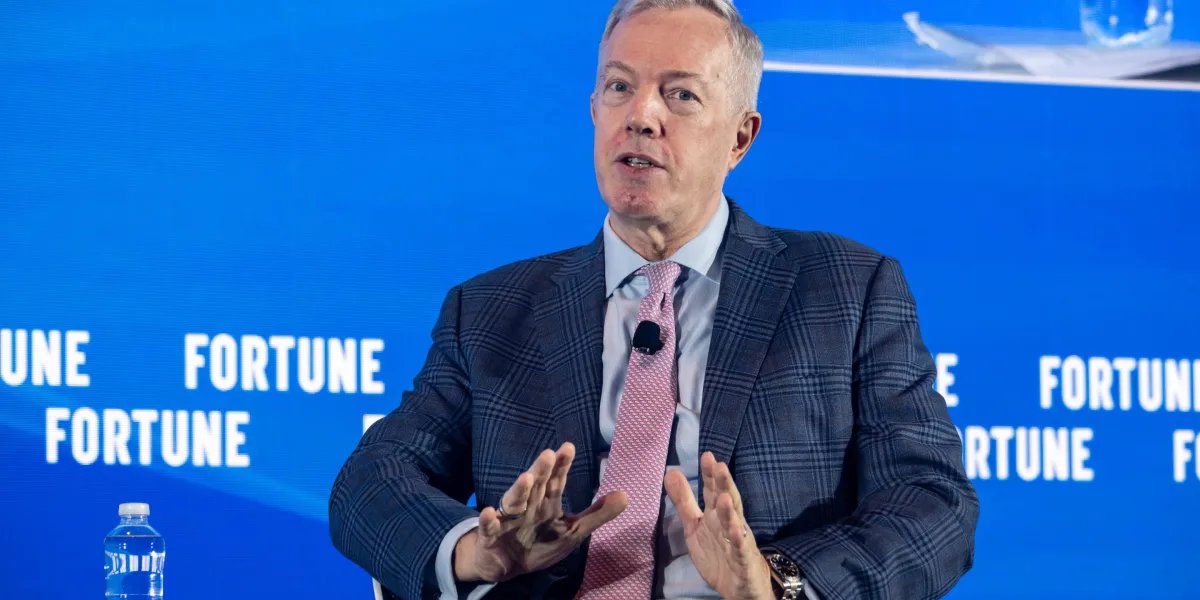
The U.S. midterm elections could have major implications for both the Iran war and the global economy, Osius said at Fortune’s Southeast Asia 500 Summit in Ho Chi Minh City, Vietnam on Nov. 3.
“The Iran war is extremely unpopular in the United States, and it’s one of the factors that will be decisive in this election,” said Osius, who served as ambassador to Vietnam from 2014 to 2017. “I expect that Congress would use the power of the purse to curb the president’s ability to wage war in the Middle East.”
About 65% of Americans disapprove of how Trump is handling the U.S. military action in Iran, according to a Pew Research Center survey released on Oct. 8. The polling outfit noted that the war has been unpopular since it began; a March survey reported 61% disapproval of his handling of the conflict.
Most polling averages put the Democratic Party ahead of the Republican Party on the generic ballot; several independent forecasts suggest the Democrats will retake control of the House of Representatives, with control of the Senate being more uncertain.
Tariffs—Trump’s other signature foreign policy—would be harder to touch. “I don’t think we’ll suddenly go back to the status quo ante,” Osius said. “Unfortunately, it’s actually harder to unwind tariffs once you put them in place.”
A Democratic House and Senate might pressure the Trump administration into more predictable trade policy, but Osius conceded that tariff power “rests with the executive.”
Trump’s initial tariffs hit Southeast Asia harder than almost any other region in April 2025, with Vietnam in particular hit with a 46% rate, later cut to 20% in a deal, based on its large trade surplus with the U.S. Since then, Southeast Asian governments have launched negotiations with Washington to get tariffs reduced, offering to lower their trade barriers and to buy more U.S. products.
Since the Supreme Court’s Feb. 20 ruling that Trump’s tariffs imposed under the International Emergency Economic Powers Act, including his“Liberation Day” levies were unlawful, the administration has resorted to other justifications, including widespread duties imposed following allegations of forced labor and overcapacity.
Still, Osius predicted that a Democratic victory would show that Trump’s more coercive foreign policy doesn’t work. “When you sort of run a state like a mobster, it may work in the short term, but in the long term it doesn’t,” he said. “It’s much more effective, especially in this part of the world, to have predictable policies, and to show that rule of law and rules-driven trade works to everyone’s benefit.”
U.S. protectionism hasn’t dented Vietnam’s growth. The Southeast Asian country grew almost 10% in the third quarter of 2026, following growth rates of 8.2% and 8.8% in the first and second quarters of the year, respectively.
More broadly, the Asian Development Bank expects developing Southeast Asia to grow by 4.7% this year and 4.9% in 2027.
Jens Lottner, the CEO of Vietnamese bank Techcombank, explained that exports were up 30% year-on-year despite the 12.5% tariff currently on Vietnamese exports to the U.S. “If you’re a bank, you’re a proxy on the economy,” he said. “We still have a couple of very good years ahead of us.”
Amol Gupte, Asia South head at Citi, argued that global trade isn’t shrinking under Trump’s tariffs, but is instead being rerouted, often to Southeast Asia. “The aggregate amount of trade in the world is not really reducing; it’s just changing flows,” he said. “Exports from China to the U.S. have shrunk quite drastically, but China’s aggregate exports have not reduced—they’ve actually grown substantially.”
The region still sits at the center of several flashpoints. Lynn Kuok, the Lee Kuan Yew Chair in Southeast Asia Studies at the Brookings Institution, highlighted continued tensions over ownership of the South China Sea. “We see off Vietnam’s coast, for instance, a greater Chinese presence. And after a decade’s pause, China is actually starting its rebuilding of islands off the Vietnamese coast,” she said.
Kuok added that the blockage of the Strait of Hormuz has exposed a second vulnerability: the Strait of Malacca, the narrow passage between Malaysia and Indonesia through which much of Asia’s trade travels. Malaysia, Indonesia, and Singapore have all pledged to keep the strait open, but she warned that “a future more nationalist government might actually seek to close off the strait, or come under pressure from various powers to close off the strait.”
Kuok said members of the Association of Southeast Asian Nations (ASEAN) are invoking international law as a way to defend their interests without taking sides in the rivalry between Washington and Beijing. “They’re not choosing U.S. or China; they’re choosing principles of international law,” she said.