

Can Anthropic generate revenues so gigantic that they far outpace the huge spending on compute that its leaders acknowledge is coming? So far, the S-1 shows surprisingly excellent bedrock performance, Fortune’s Shawn Tully reports.
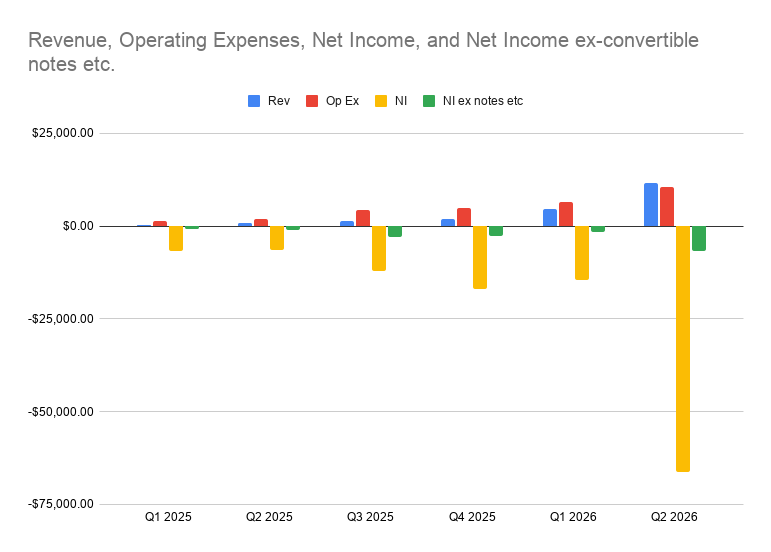
Revenues exploded 13x from $1.3 billion to $16.3 billion in H1 2026, over the same period last year. But the company’s income statement shows a staggering loss of $80.7 billion. The vast bulk of that deficit arose from changes in the “fair value” of convertible notes and other non-cash charges.
Here’s a visualization of that (below). Anthropic’s quarterly revenues (blue) are growing and keeping pace with its operating expenses (red). But its GAAP net income (yellow) shows steep losses increasing over time. However, if you back out the non-cash charges for the changing value of convertible notes, then Anthropic’s net income losses (green) look manageable. In fact, the company actually garnered adjusted operating income of $1.6 billion for the first six months of 2026, for a 9%+ margin.
MORE FROM FORTUNE
Anthropic Is Going Public. Here’s What Its Filing Reveals | Fortune Daily
Microsoft offers buyouts to nearly 30% of workforce in ongoing AI shift – Sebastian Herrera
How is P&G’s CEO getting inflation-weary shoppers to pay more? It starts with cashmere-like diapers – Phil Wahba
Trump promised 300,000 tons of beef imports at lower tariff rates to reduce grocery costs. Instead, shipments have lagged and prices haven’t budged – Sasha Rogelberg
Meet Wizz Air’s CEO—his father was jailed under Soviet rule. Now, he’s on $4.4 million a year and would ‘rather keep building than sit on a beach’ – Orianna Rosa Royle
‘Why do we value a Mars bar more than life-saving medicine?’ Sandoz CEO calls for level playing field with cheap Chinese antibiotics – Sam Forsdick
THE DOWNSIDE
AI has produced ‘zero financial payoff to corporate America outside of tech’—Apollo
AI is dividing companies into haves and have-nots. And the haves are the tech companies, according to Apollo Global Management’s Torsten Sløk. “Despite massive investments and widespread hype around artificial intelligence, the technology has delivered zero financial payoff to corporate America outside of tech,” he said in a recent blog.
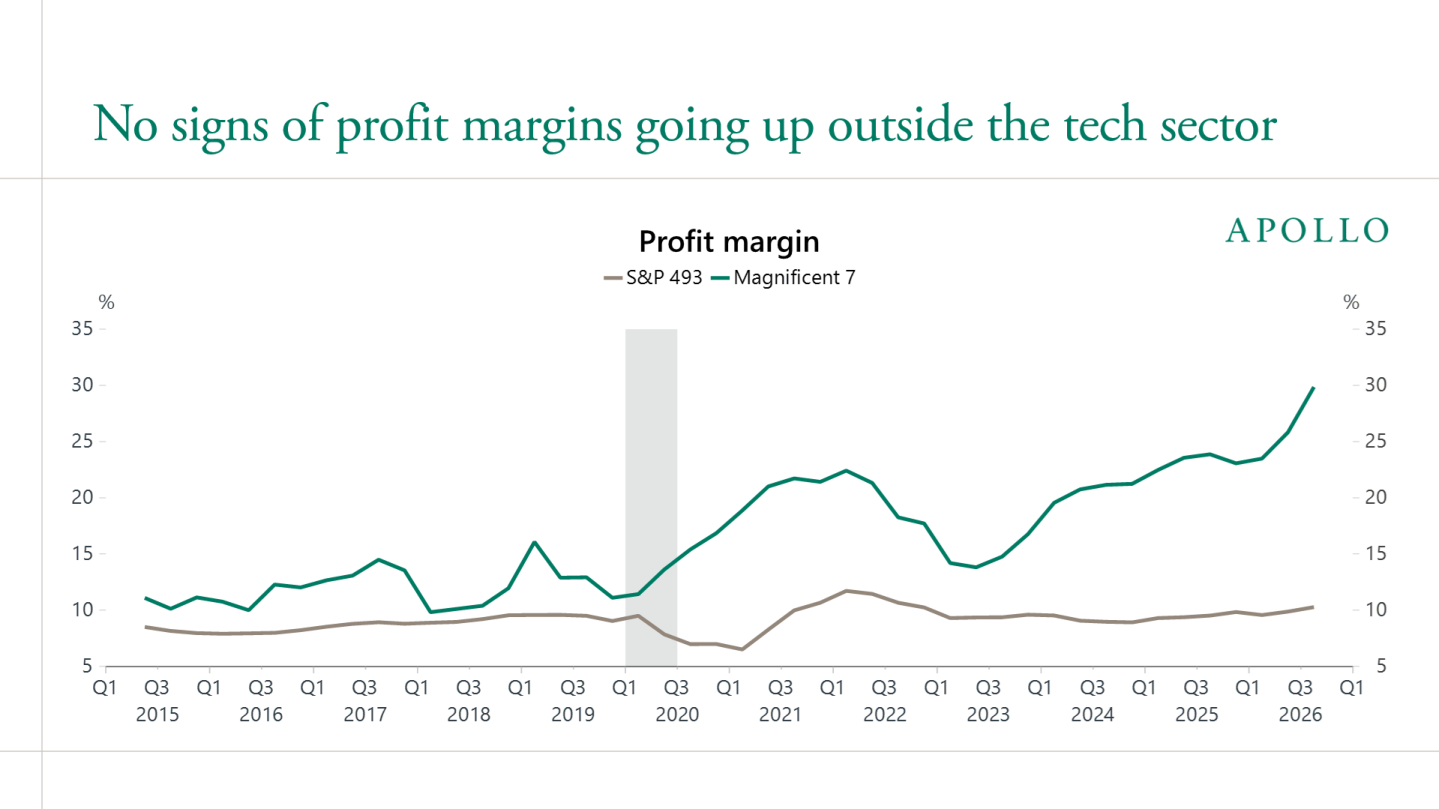
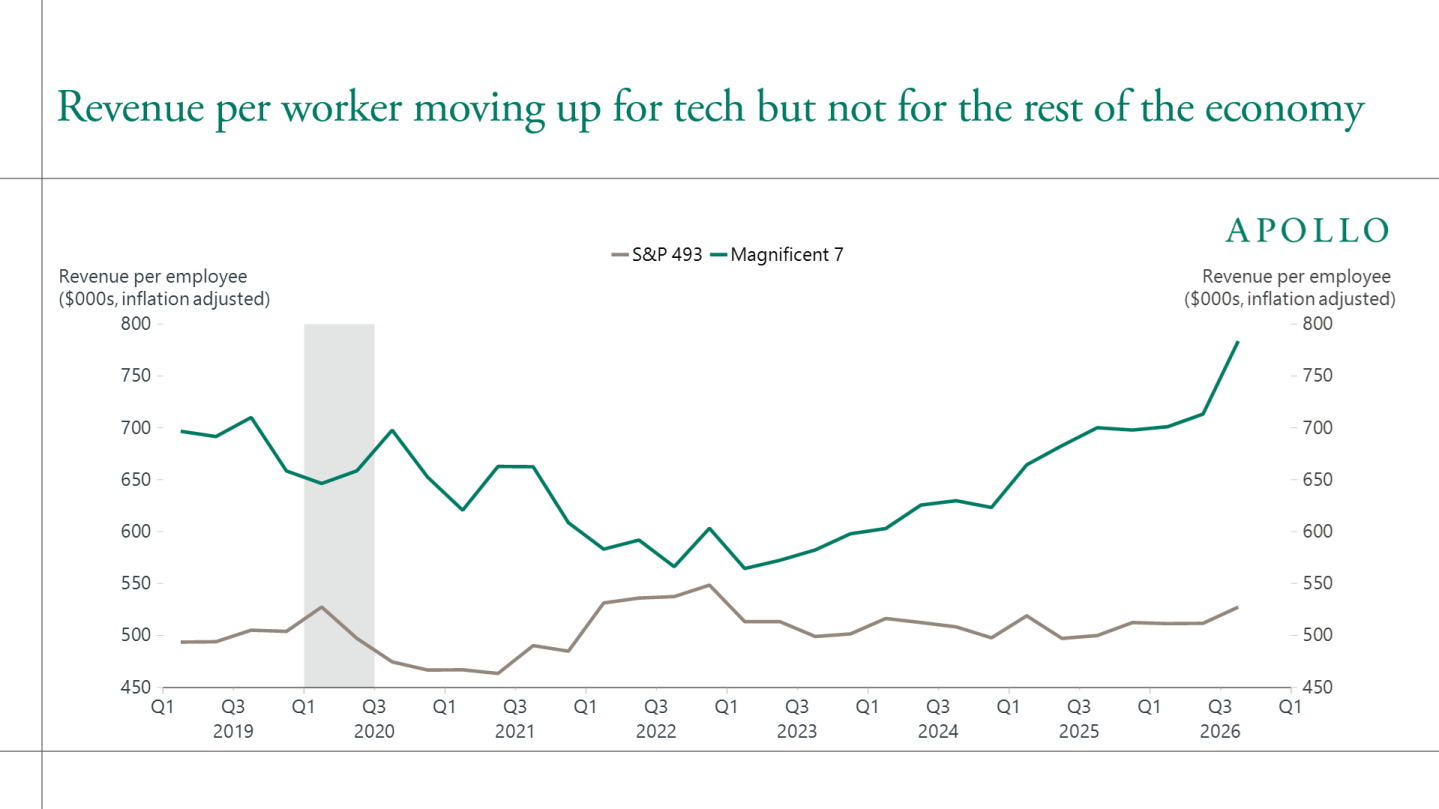
“Revenue per worker is rising for the Mag 7 but is flat for the S&P 493,” he wrote. “Profit margins are rising for the Mag 7 but are flat for the S&P 493.” The same effect—or lack thereof—shows up when you look at productivity, too.
But why?
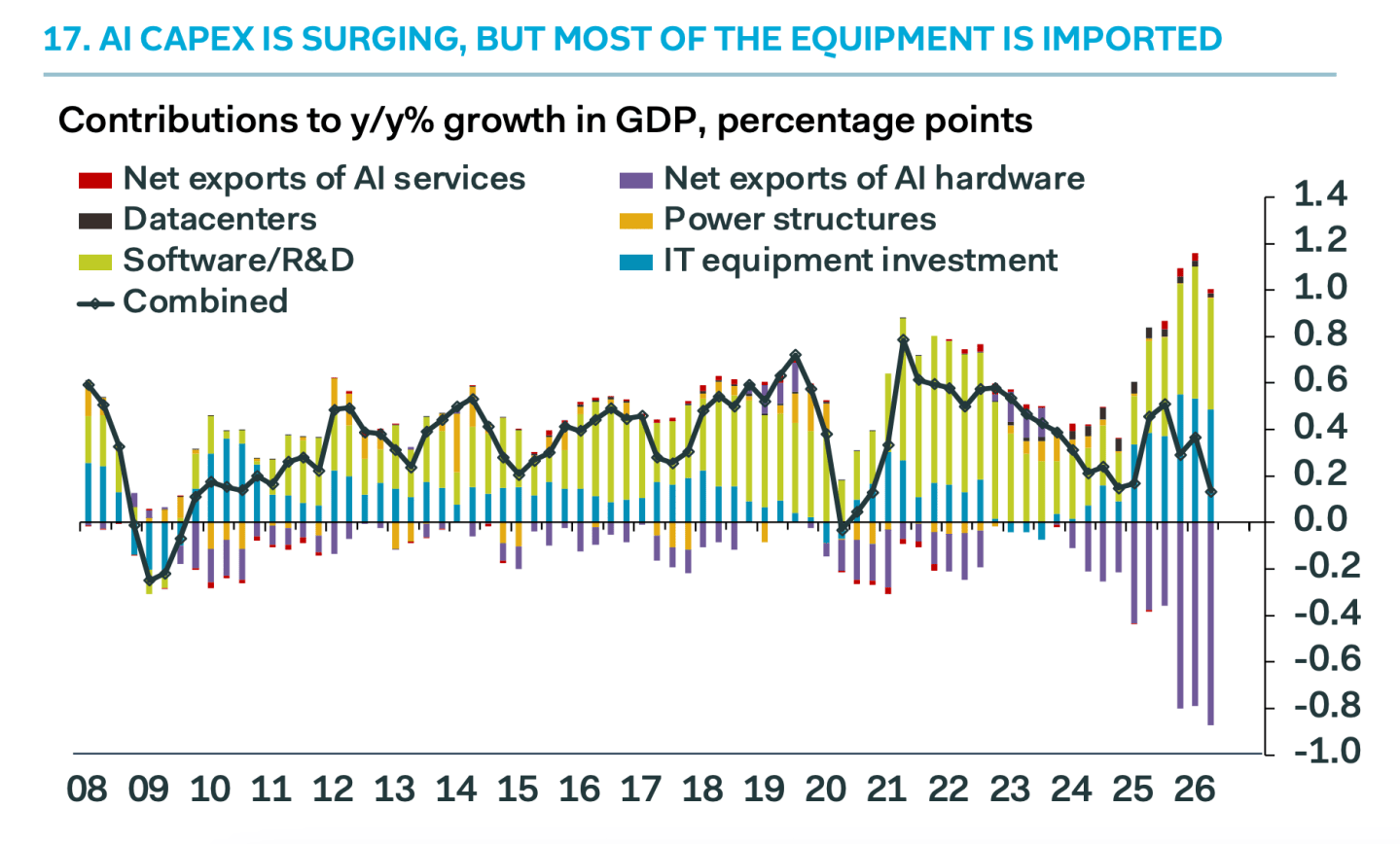
A couple of macro reasons explain why AI’s positive effects are conspicuous by their absence in non-tech companies. Corporate investment in AI is actually crowding out investment elsewhere in the economy, according to Pantheon Macroeconomics’ Samuel Tombs and Oliver Allen:
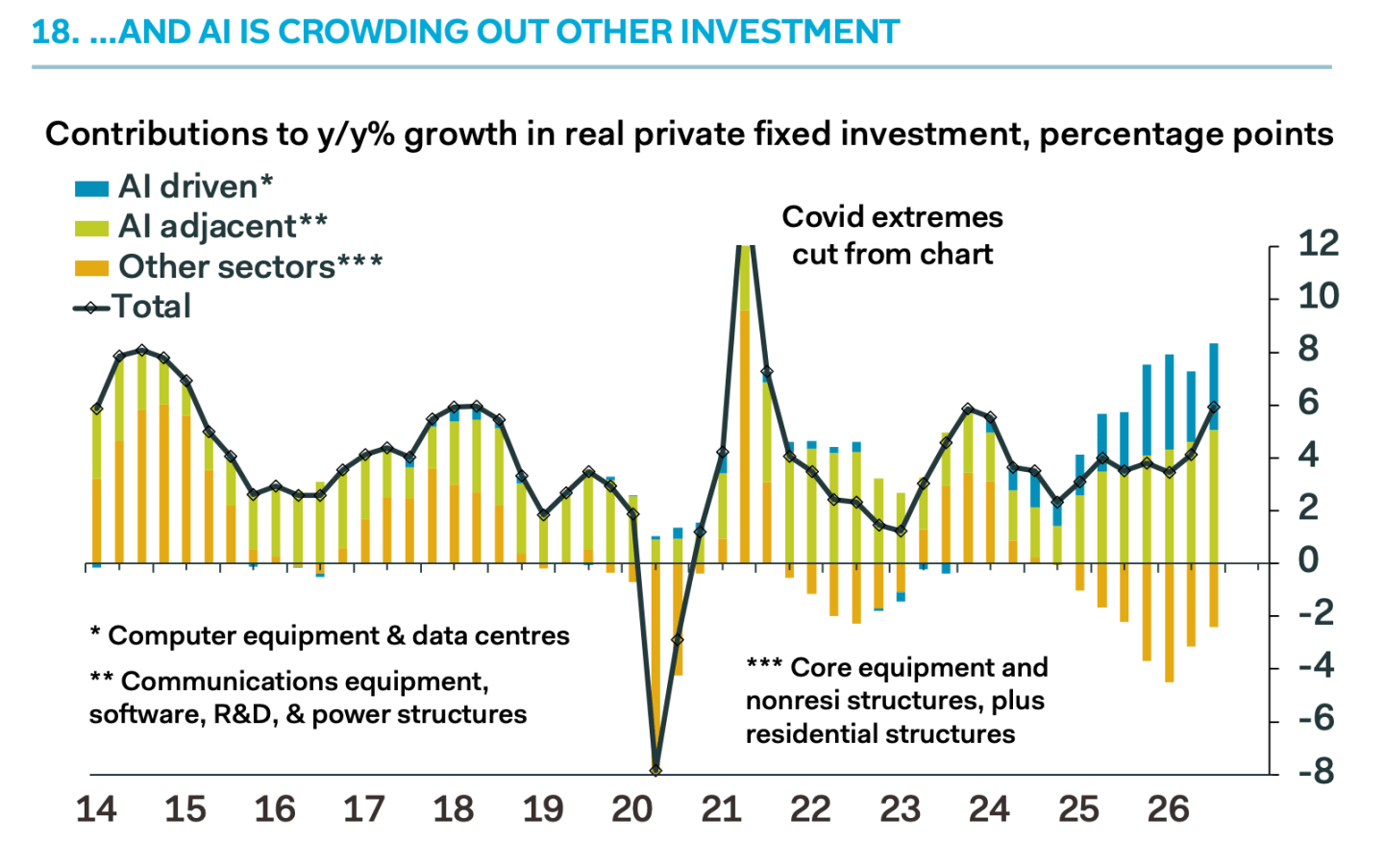
And because much of the capex investment involves importing tech from foreign companies, that cash—which by definition leaves the country—is negative for GDP growth:
THE MARKETS
Tech bulls are barely winning their fight against the oil bears
Stock markets were mixed globally this morning. Asia had a good day, with the exception of China’s CSI 300, which fell more than a full point. Europe, which is heavily dependent on energy imports, declined in early trading after the price of Brent crude oil rose to $117 per barrel and settled later at $116.
In the U.S., futures for the S&P 500 and Nasdaq were up marginally after the main index rose yesterday. Tech stocks were largely buoyed by the appearance of Anthropic’s IPO filing, which largely calmed fears that AI frontier labs—and the ecosystem they have created around them—might be unable to operate sustainably.
Meta was the major exception: Its stock declined nearly 2% after it announced it would offer $95 billion in new dilutive stock to fund its AI buildout plans.
- S&P 500 futures were up marginally to 0.07% this morning. The index rose 0.7% yesterday.
- In Europe, the Stoxx 600 fell 0.18% in early trading, and the U.K.’s FTSE 100 fell 0.77% before lunch.
- Asia: South Korea’s KOSPI was up 3.09%. Japan’s Nikkei 225 was up 1.73%. India’s Nifty 50 was up 0.08%. China’s CSI 300 was down 1.32%.
- Brent crude hit $117 per barrel over the last 24 hours and was just under $116 at press time.
- Bitcoin declined to $79,585.
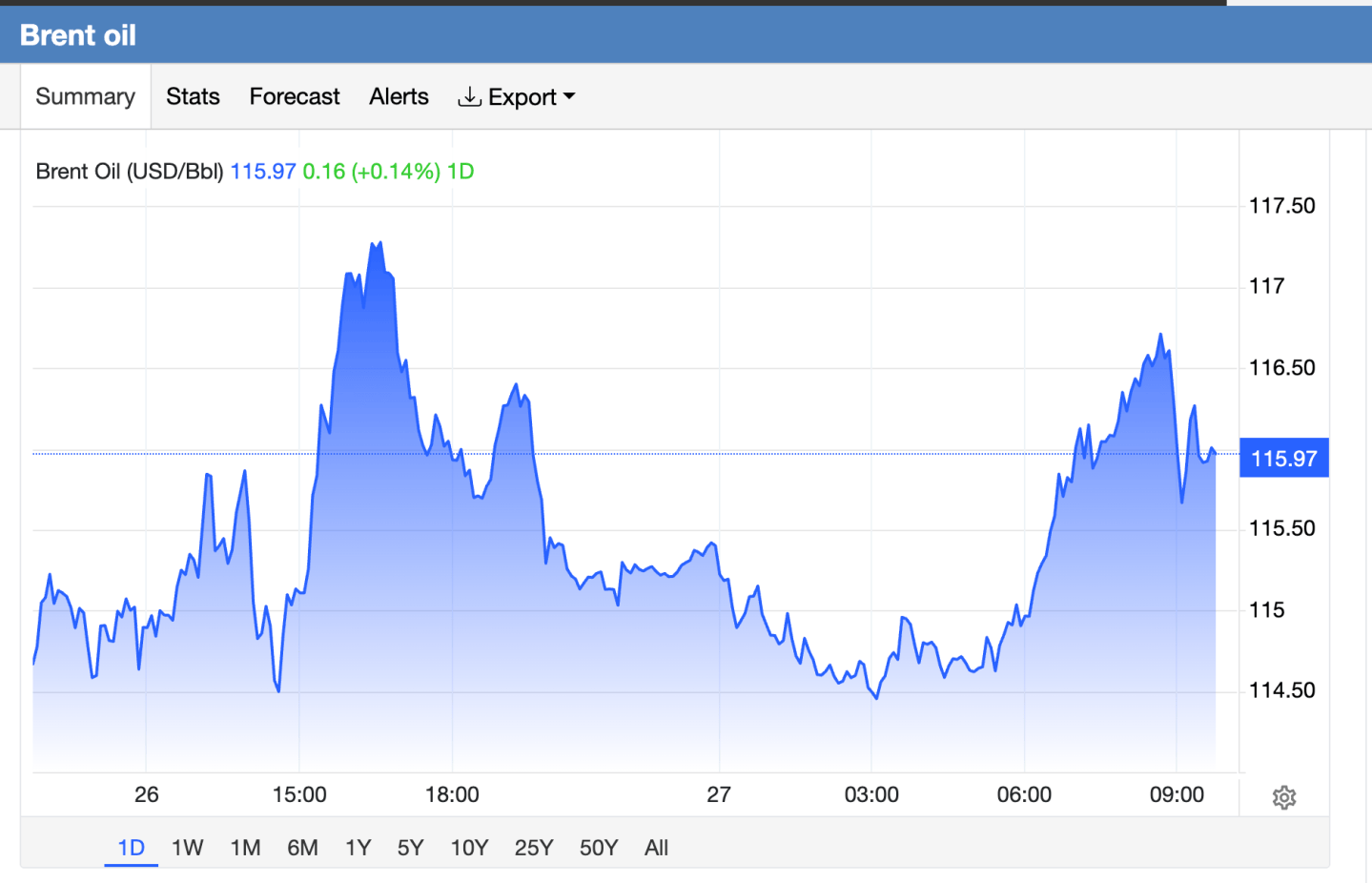
Chart via TradingEconomics.com
CHART OF THE DAY
Americans are increasingly delinquent on their consumer debt
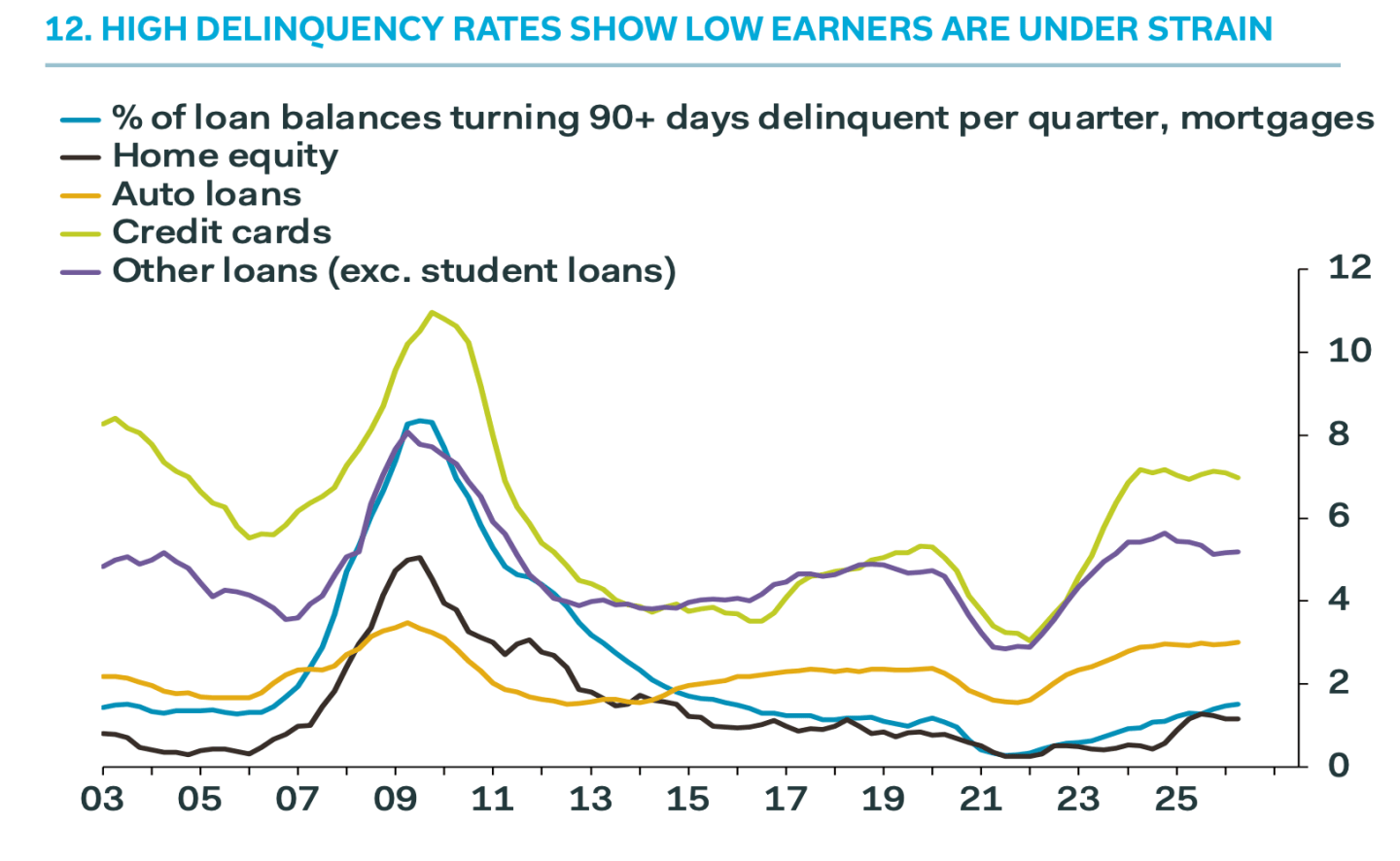
This chart from Pantheon Macroeconomics is self-explanatory—an increasing percentage of U.S. consumers, especially low earners, are more than 90 days delinquent on their credit cards, auto loans, and home equity debts.
NUMBER OF THE DAY
60%
The portion of job applicants suspected of being fake or fraudulent, as detected by drugmaker AbbVie after it advertised five vacancies in information security and risk management. “For a company that receives more than 1.2 million applications annually and hires roughly 12,000 people, that percentage was unacceptable,” a spokesperson for Phenom told Fortune. Phenom is an AI-driven HR company that counts AbbVie as a client. Gartner predicts that by 2028, one in four applicants will be fake.
THE FRONT PAGES TODAY
Can French drugmaker Sanofi fix its pipeline? – FT
The ‘stablecoin sandwich’: Why speeding up payments isn’t so simple, according to Mastercard – CNBC
James Comey charged again by the DOJ – Axios
America needs Canada’s aluminum. Trump’s tariff exposed just how badly. – WSJ
US plans two-month extension to shipping-fee truce with China – Bloomberg
A rare cease-fire, brokered by Melania Trump, begins in a besieged Ukrainian city – NYT
ONE MORE THING
Hold the pancakes! Canada’s strategic reserve of maple syrup is nearly exhausted
The vast majority of maple syrup comes from Quebec, but the Canadian province is nearly tapped out of reserves, Fortune’s Jason Ma reports. The Quebec Maple Syrup Producers, which oversees the strategic syrup reserve, predicted the stockpile will be empty by February.
The strategic reserve consists of three warehouses in Quebec that can hold about 218,000 barrels.
Last year saw an especially big spike in export demand after President Trump launched his global trade war. To get ahead of the tariffs, Americans rushed to buy up Canadian syrup supplies. As a result, total syrup exports jumped nearly 16%, up from 9% growth in 2024.
- ➡️ Would you like to sponsor this newsletter? Contact advertising@fortune.com for details.
- ➡️ If you would like to receive this information in your inbox every morning before the markets open in New York, sign up here.