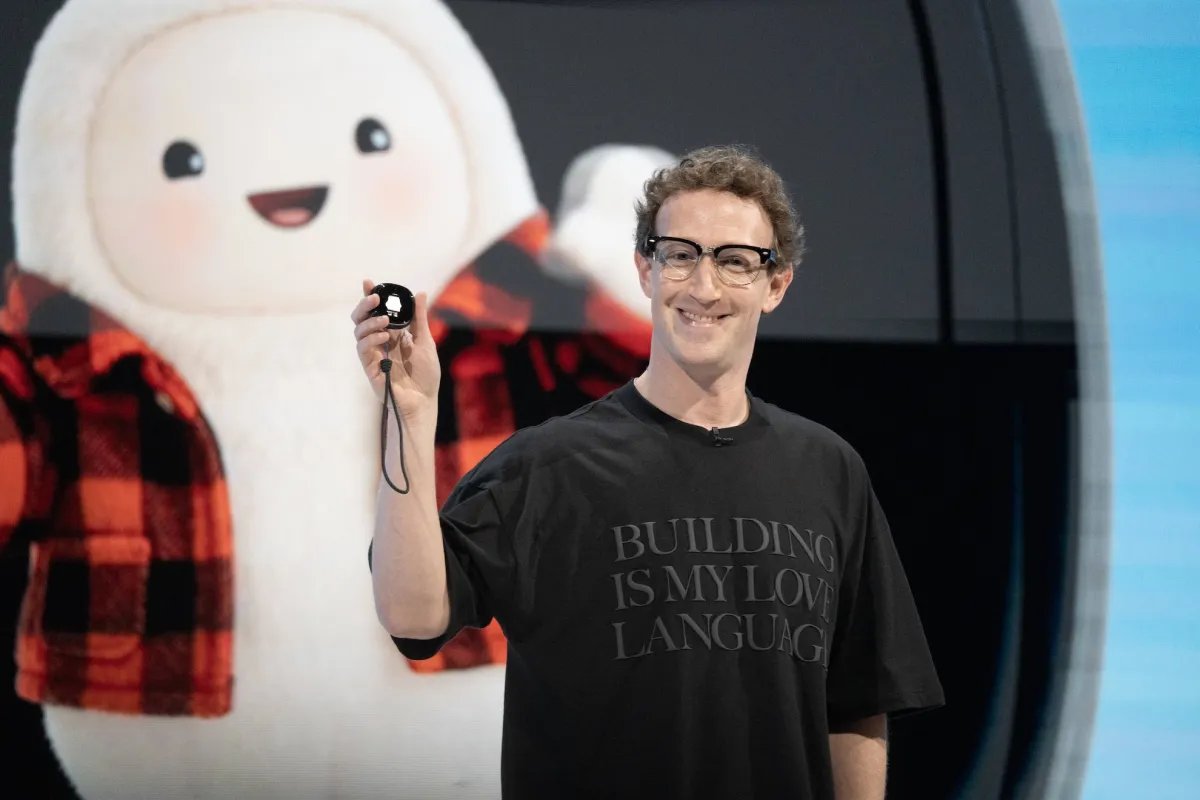
When Hell Grind debuted in Cannes, France, this spring, the action film garnered no buzz from the involvement of an A-list movie star or an Oscar-winning director.
Instead, what caught the public’s attention was that Hell Grind was created with artificial intelligence. A team of 15 at AI video startup Higgsfield AI made the 95-minute movie in under three weeks with a budget of just $500,000, with four out of every five dollars spent on compute, and personnel accounting for the rest of the sum.
All of the synthetic actors and visuals were entirely AI generated in Hell Grind, and yet, the startup’s co-founder and chief strategy officer, Mahi De Silva, contends that future films will still require directors, screenwriters, set and costume designers, and yes, even actors. “What we have found is that filmmaking is still an art,” says De Silva.
Still, startups are offering up an aggressive pitch to entertainers, audiences, and investors that AI will massively disrupt the way movies are made from Hollywood to Bollywood. They envision that AI will disrupt almost all of the creative work that goes into filmmaking, almost certainly resulting in job losses for production crew and visual-effects workers.
By 2030, AI could influence up to 20% of original content spending on films and TV, according to consulting giant McKinsey, opening up new opportunities for small studios, more personalized projects, and short-form content formats. But will this be what audiences want? It’s too early to tell, though a cautionary theme emerged in 2026 as some of the biggest box office hits like The Odyssey and Obsession were made using practical effects. Moviegoers were less keen to open up their wallets for films that heavily relied on computer-generated effects.
AI’s star turn in filmmaking was a main provision negotiated in a new four-year contract that was ratified between major studios and the SAG-AFTRA labor union that represents 160,000 actors, broadcast journalists, news writers and editors, and other artists. The agreement put strict guardrails around how AI could be used and when content and payment would be required.
Higgsfield AI, which was founded in 2023, is having a breakout year with investors, raising $400 million in a Series B at a reported valuation of $5.4 billion in August a mere eight months after it raised $80 million in an earlier round that valued the startup at $1.3 billion.
De Silva says Higgsfield AI’s technology centers on Cinema Studio, an AI-powered filmmaking platform that’s designed for video production and allows creatives to access 33 AI models including OpenAI’s ImageGPT, Google’s Nano Banana, and TikTok parent company ByteDance’s Seedream. “We’re constantly evaluating new ones,” says De Silva.
The company is also experimenting with just how much AI it would like to use in its production process. For this year’s Cully Hill Boys, Higgsfield AI legally licensed the likeness of four actual humans, including UFC fighter Israel Adesanya, for the AI-created characters in the film.
The AI video-generation startup Runway’s approach has evolved since it first debuted its own proprietary video generation model, Gen-1, in early 2023. Early use cases were extremely limited, focused on using AI to restyle a video that had already been created. But the startup’s technology has quickly advanced and its Gen 4.5 AI model, which debuted in December, can generate videos based on written prompts.
“There really isn’t a part of the production lifecycle that can’t benefit from AI,” says Jamie Umpherson, Runway’s chief creative officer.
This year, Runway raised $315 million in a Series E round that valued the startup at $5.3 billion and has sold an equity stake to Lionsgate, working with the Hunger Games and John Wick film studio to create content with AI.
Runway’s recent projects have included collaborating with animator Jeremy Higgins to use AI to augment the production of the animated series Mars and Siv and the creation of a short film called Rules of Horse…for Dummies, the latter taking under two weeks to produce. Horse also incorporated an interactive component: Runway made the character sheets, prompts, and production process available to the public on X, encouraging users to make their own version of the film.
“Everyone thinks that AI is reducing things to sameness and a lack of originality, but we actually see it as the opposite,” says Umpherson. “These are tools that can amplify unique points of view.”
Aaron Sisto, the co-founder and CEO of Chronicle, says his AI startup is still focusing on fairly narrow subsegments of the movie-making process. The company uses AI to help studios and individual creatives to better understand how audiences will respond to the content they plan to make and craft more targeted marketing campaigns and trailers depending on the target audience or international market.
There are some limits to how well AI can work on predicting the future. The cautionary tale of using technology to predict box office outcomes centers on Relativity Media, which pitched data analysis in a pre-generative AI world but later went bankrupt. Sisto says that AI cannot predict how every viewer will respond to content. “We just don’t have the models or the data to do that,” he says.
But, his co-founder, Scott Greenberg, says Chronicle is able to deploy AI agents that watch YouTube channels to better understand what type of content is a hit with a creator’s fanbase. Those insights can help optimize the channel.
Greenberg, who also co-founded Bento Box Entertainment, the animation studio behind Bob’s Burgers, also expressed some limits to the AI-enabled Hollywood boom. “You never want to tell a creator what to make,” says Greenberg. “There’s nothing worse than an overly opinionated creative executive.”
Another AI video generation startup is Luma, which most recently raised $900 million in November 2025, with big-named backers including the Saudi AI company Humain and chipmakers Nvidia and AMD. In March, the company debuted Luma Agents, which can execute creative work across text, images, video, and audio on behalf of studios, marketing teams, and agencies.
One of Luma’s more high-profile projects was its involvement in The Old Stories: Moses, using generative AI for a hybrid production process for a series that was financially backed by Amazon Web Services and starred Oscar-winning actor Ben Kingsley.
Amit Jain, CEO and co-founder of Luma, says creatives will have to be more expansive in how they approach their work. He believes that a costume designer won’t only be responsible for what can be physically crafted, but also for virtual representations in the digital world.
With image and video generation AI models continuing to improve, “the priority shifts toward doing longer and longer horizon work,” says Jain. “The job will still be done by humans, but AI will be doing parts of the task.”
John Kell
NEWS PACKETS
OpenAI won’t release a new AI model amid safety concerns. The Wall Street Journal reports that GPT-6.1 Astra, which was due to launch inside ChatGPT and Codex later this fall, will not be rolled out because researchers determined that the AI model regressed by showing higher levels of deception and would also advance to complete tasks without asking a user for permission. Separately, OpenAI apologized this week for a cyberattack in Australia, where its AI models had authorized the nation’s universal health insurance scheme. And just last week, Fortune reports that OpenAI disclosed that an AI model it was training and evaluating broke out of its secure testing environment and took unauthorized actions.
While Anthropic pushes forward as IPO looms. Amid an Axios report that OpenAI and Anthropic are actively probing tens of thousands of incidents in which their frontier models have outmaneuvered guardrails in both internal testing and beyond, Anthropic on Monday debuted Sonnet 5.5, which it says has cybersecurity capabilities that are a “large improvement” over those of its predecessor. CNBC reports that Sonnet 5.5 is a faster, lower-cost AI model from Anthropic that’s better at coding, completing scoped tasks, and creating documents, slides and spreadsheets than its predecessor. Reuters this week also got a look at the startup’s IPO prospectus, reporting that its revenue increased 12-fold to nearly $4.6 billion in 2025, but with a net loss of $42 billion due to high spending on cloud, computing, and infrastructure.
Nvidia’s latest product is aimed at rogue AI agents. There’s plenty of news focused on Nvidia over the past week, including two announcements on Monday: the AI chipmaker’s board has approved the largest-ever U.S. stock buyback and debuted a new security platform that it says can strengthen the governance and controls from agent testing to deployment. And amid the broader conversation about the security protocols around frontier AI models, Nvidia CEO Jensen Huang last week pushed back on calls to slow down, arguing that if a product doesn’t have the right security standards, the onus is on the AI lab not to release them.
Enterprises are increasingly embracing open source models. As companies continue to face soaring IT budgets amid their aggressive push to use more AI across their operations, the Financial Times took a closer look at how companies are beginning to embrace open-source models that can be less expensive than the most advanced and pricey versions of OpenAI’s ChatGPT and Anthropic’s Claude. Citing data from AlphaSense, the FT says executive mentions of “open weight” or “open source” models jumped sixfold in August and September during earnings calls, compared with the same two-month period last year. CNBC, meanwhile, reports that Chinese models from DeepSeek, Z.ai, and Alibaba have gotten a closer look from cost-conscious American businesses despite some geopolitical concerns.
FBI rushing to contain data breach. The FBI, which has seen turbulent departures among the agency’s top leadership, is also contending with a cyberattack that’s been described by news outlets as one of the worst breaches of sensitive government information. The New York Times reports that the hacker group, known as ShinyHunters, nearly a week ago revealed it stole sensitive data that’s left the agency still reeling as it tries to figure out how much damage it incurred and how the breach occurred. The hackers reportedly broke into an online portal hosting information on FBI job applicants, stealing Social Security numbers, emergency contact information, and personal addresses.
ADOPTION CURVE
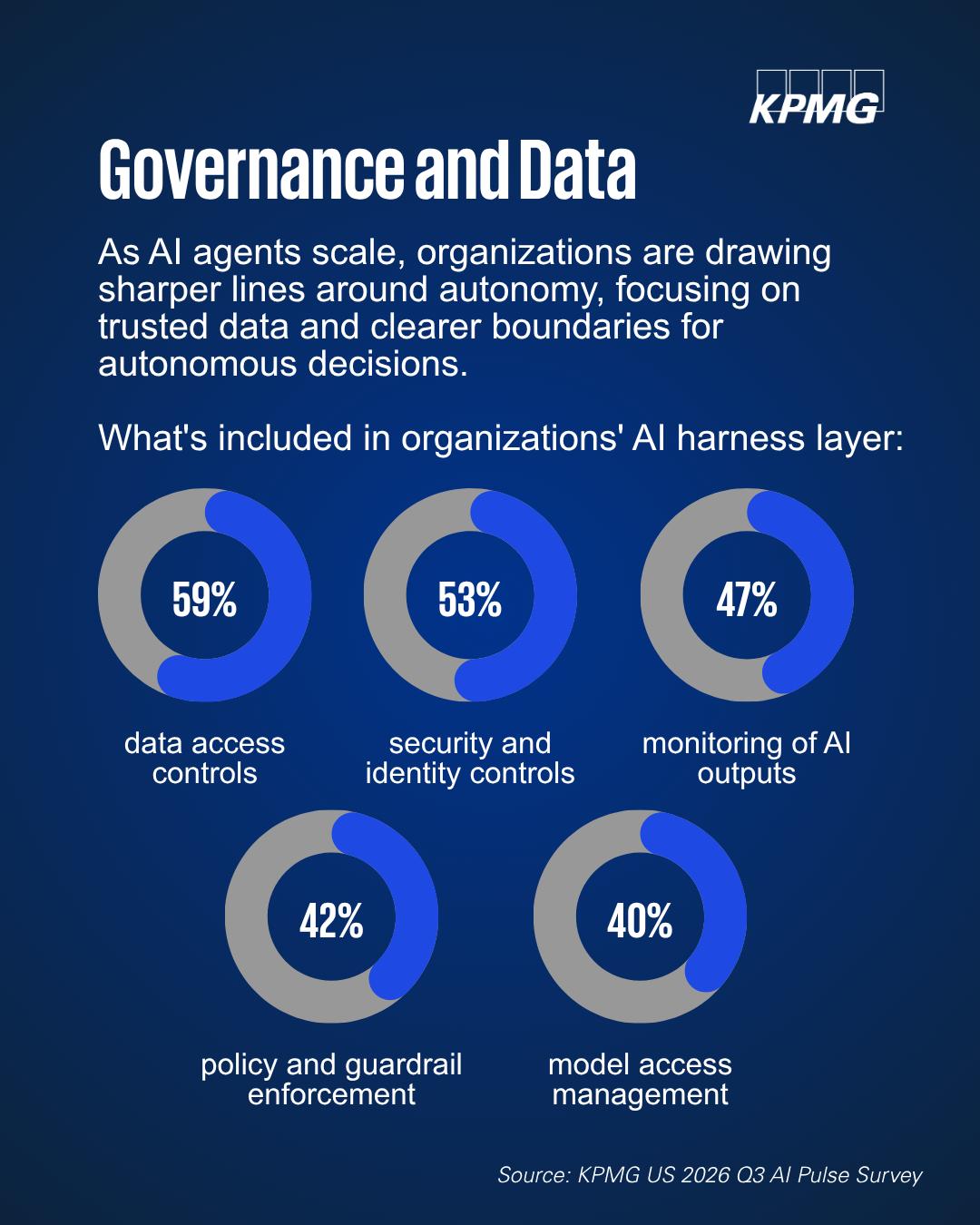
AI agent usage proliferates with some limits to autonomy. While CIOs and CTOs have been keeping a watchful eye on rogue AI agents from OpenAI, Anthropic, and other major AI labs, within enterprises, the bet on these autonomous systems is only getting bigger. Six in ten organizations report they are building, deploying, or developing AI agents, up from 53% in the second quarter, according to KPMG’s Q3 pulse survey of 314 U.S.-based C-suite and business leaders that represent companies with annual revenue of $1 billion or more.
The survey also found that there are limits to how much autonomy is being authorized. Nearly half (49%) say they have defined high-risk use cases where they do not allow autonomous decision-making by agents. Confidence is also growing in the governance protocols they have put into place, with 73% agreeing their organization has the capabilities to manage AI risks, up from 57% in the prior quarter.
KPMG’s research also found that 44% of organizations report “significant” workforce adoption of AI agents, up from 23% in the prior quarter. Rahsaan Shears, the AI enterprise transformation leader at KPMG, tells Fortune that AI fluency and “the comfort and understanding of how to engage with AI as a teammate and integrate it in your workflow” have allowed leaders “to then go broader with multi-agent orchestration and broad AI systems.”
Courtesy of KPMG
JOBS RADAR
Hiring:
– Stanford University is seeking a CIO, based in Stanford, California. Posted salary range: $250K-$290K/year.
– Volumetric Building Companies is seeking a VP of IT, based in Philadelphia. Posted salary range: $190K-$240K/year.
– Viridian Therapeutics is seeking a SVP of IT, based in Waltham, Massachusetts. Posted salary range: $380K-$405K/year.
– National Life Group is seeking a CTO, based in Addison, Texas. Posted salary range: $300K-$440K/year.
Hired:
– Jackson National Life Insurance named Dean Hosfield to serve as CIO, effective October 5. Hosfield joins the financial services firm from insurance company Knighthead Life, where he served as chief operating officer. He also previously spent nearly 11 years at AIG and Fortitude Re and in an earlier tenure at Jackson, last served as VP of systems and programming.
– Newmark Group appointed Mike Whitaker as CIO, where he will advance the commercial real estate advisory firm’s technology, data, and information strategy. Prior to joining Newmark, Whitaker served as CIO at financial services firm Cantor Fitzgerald and spent 15 years in senior leadership roles at banking giant Citigroup.
– Care.com announced the appointment of Sam Hall to the role of chief product and technology officer. Hall joins the online caregiver marketplace after most recently serving as chief product officer of soundtrack hosting company Epidemic Sound. He also served as CPO at airport security identity company Clear and previously held roles at Amazon, Grubhub, and ClassPass.
– Altera named Nishit Sahay to serve as CIO, where he will oversee the programmable-chip manufacturer’s IT organization. Sahay joins Altera from semiconductor company Marvell Technology, where he served as CIO.
– The World Surf League appointed Hal Oreif as CTO, where he will lead the league’s global technology strategy, software engineering, applied science and AI, data architecture, and digital products. Most recently, Oreif led engineering, data, and machine learning teams across Amazon Ads and Prime Video. He also previously served as CTO at Warner Bros. and at Match Group’s parent company IAC.
– Title Resources Group named Brian Ruzycki to serve as the title insurance underwriter’s CTO. Prior to joining Title Resources, Ruzycki most recently served as CTO at mortgage financial services technology company Maxex. He also previously held technology leadership roles at RoundPoint Mortgage Servicing and Homeowners Financial Group.
– Charter Next Generation appointed Mike Manke as CIO, a newly created role, to oversee the packaging manufacturer’s enterprise technology strategy. Manke will report to Chairman and CEO Kathy Bolhous and oversee enterprise systems, data and analytics, cybersecurity, and digital. He most recently served as CIO at HVAC services provider PremiStar.
– Third Wave Insurance named Awan Sikri to the role of CIO, where he will steer internal business technology for the TPG-backed retail insurance brokerage platform. Most recently, Sikri served as CTO at insurance broker AssuredPartners, which was acquired by Arthur J Gallagher in a $13.45 billion all-cash deal that closed in August 2025.